No robot rejected your resume. Here's who actually did.
An ATS almost never rejects a resume on its own. What actually filters you out: knockout questions, parsing failures and a human in a hurry.


Ask ten rejected candidates what happened and eight will tell you the software binned them. The belief is now so widespread that does an ATS reject resumes has become one of the most searched questions in job hunting. The short answer is almost never, at least not in the way people mean. The longer answer is more useful, because it tells you what to fix.
The myth persists because it is comfortable. A robot rejection is nobody's fault and nothing to act on. A human rejection invites the harder question of why a person with your record in front of them moved on. That question has answers, and they are mostly within your control. What follows separates the folklore from the mechanisms, because the failures people blame on robots have entirely different fixes.
Where the 75% rejection myth came from
You have probably seen the claim that 75% of resumes are rejected by an ATS before a human ever sees them. Try to trace it and the trail goes cold. The figure circulates through blog posts citing other blog posts, with the original source usually landing somewhere in the marketing material of companies selling resume services. No verifiable study sits underneath it. Treat it as vendor folklore.
It survives because it flatters everyone involved. Candidates get an explanation for silence that is not personal. Resume services get a monster to sell protection from. The number is doing sales work, not describing how any shipping system actually behaves.
A quick test for claims like this: ask which system performs the rejection, at which step, on what criterion. The mainstream vendors document their screening workflows in detail, and none of that documentation describes a step where software discards applications by keyword score. A claim about all systems that names no system is not evidence. It is copy.
Does an ATS reject resumes? What the software actually does
The mainstream systems, Workday, Greenhouse, Lever, iCIMS and Taleo, rank, filter and store applications. None of them silently bins a resume because it scored poorly against a keyword model. A low-relevance application does not get deleted. It sits in the database, retrievable by anyone who searches for it, unread rather than rejected.
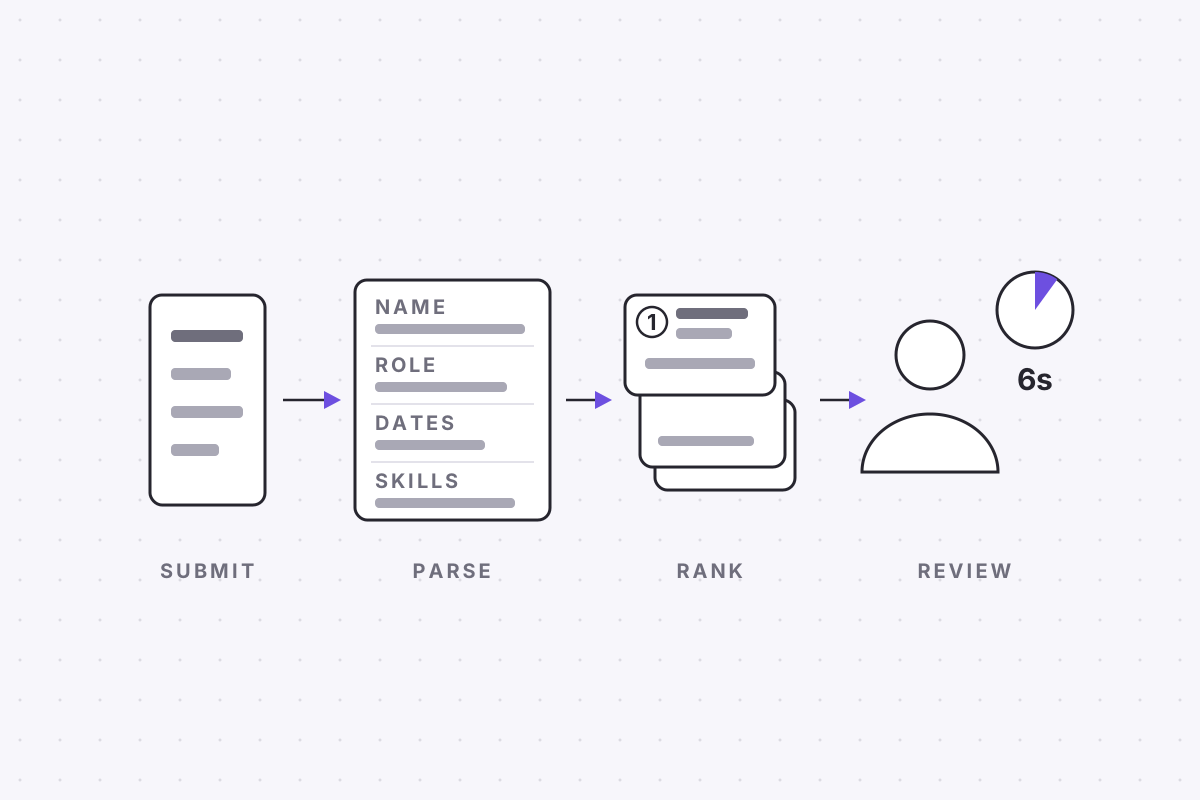
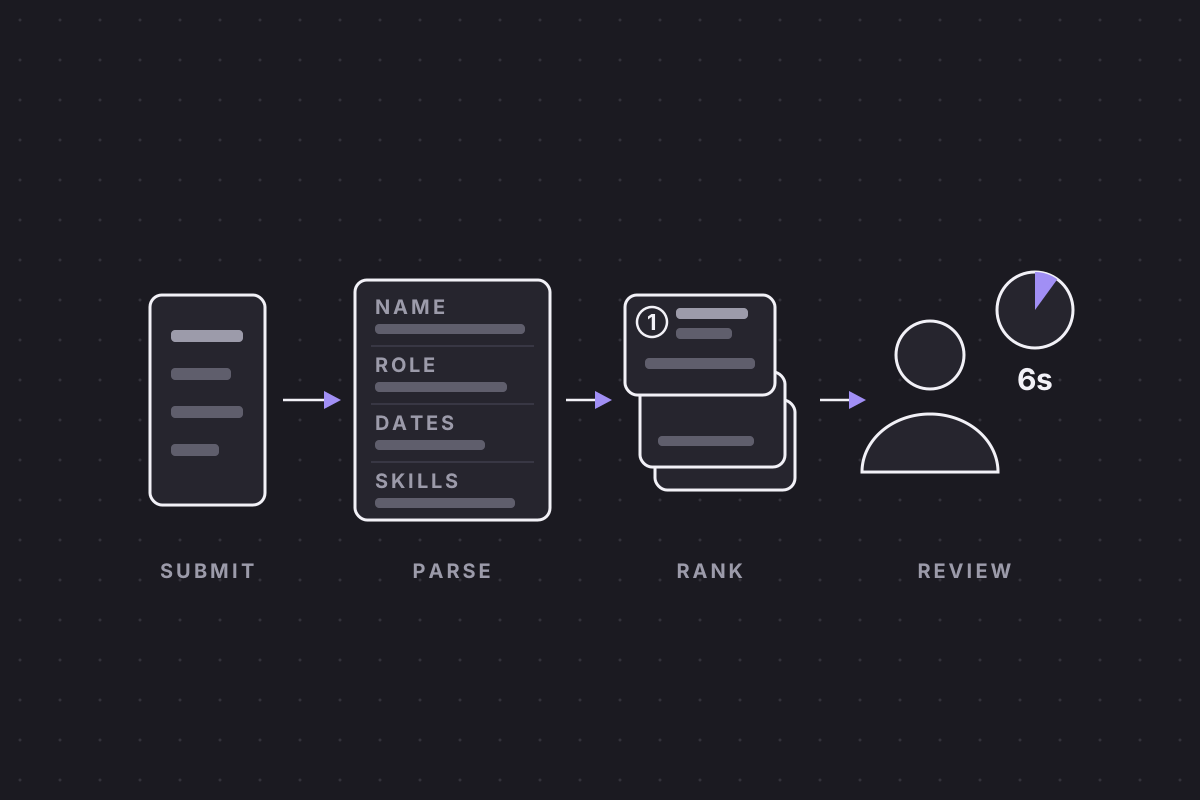
The full journey from submission to shortlist is laid out in what happens in the six seconds after you hit apply, but the relevant point is simple. ATS resume screening is retrieval plus human review. The software decides what surfaces first. A person decides what happens next. There is no step in the standard pipeline where a machine reads your resume and issues a verdict on its own.
Two honest caveats. A record ranked far down the results is not rejected, but it is functionally invisible unless someone scrolls or searches for it, which at volume they may not. And a growing add-on market sells AI screening layers on top of these systems, which is exactly why some jurisdictions have begun regulating automated employment decision tools. Those layers remain the exception. The default pipeline, the one your application almost certainly went through, keeps a person in charge of the decision.
Knockout questions: the one true auto-reject
One genuine auto-reject mechanism does exist, and it has nothing to do with your resume. Knockout questions are the yes-or-no items on the application form: work authorisation, required licences, willingness to relocate, salary expectations. Employers configure acceptable answers in advance, and a response outside the band closes the application before any human sees it.
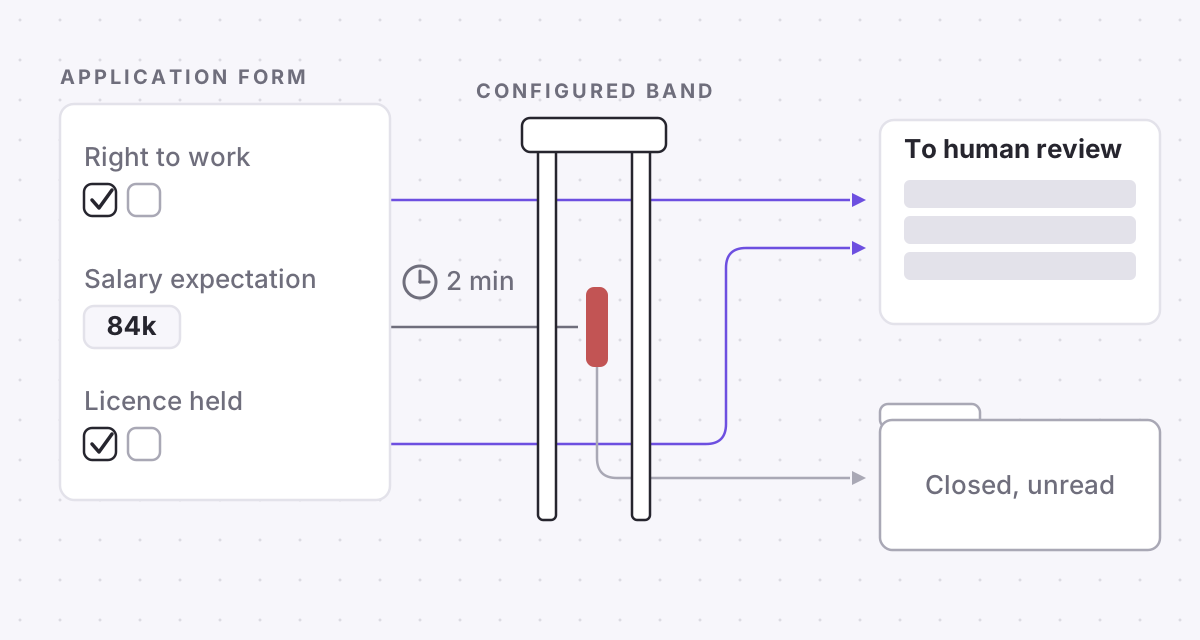
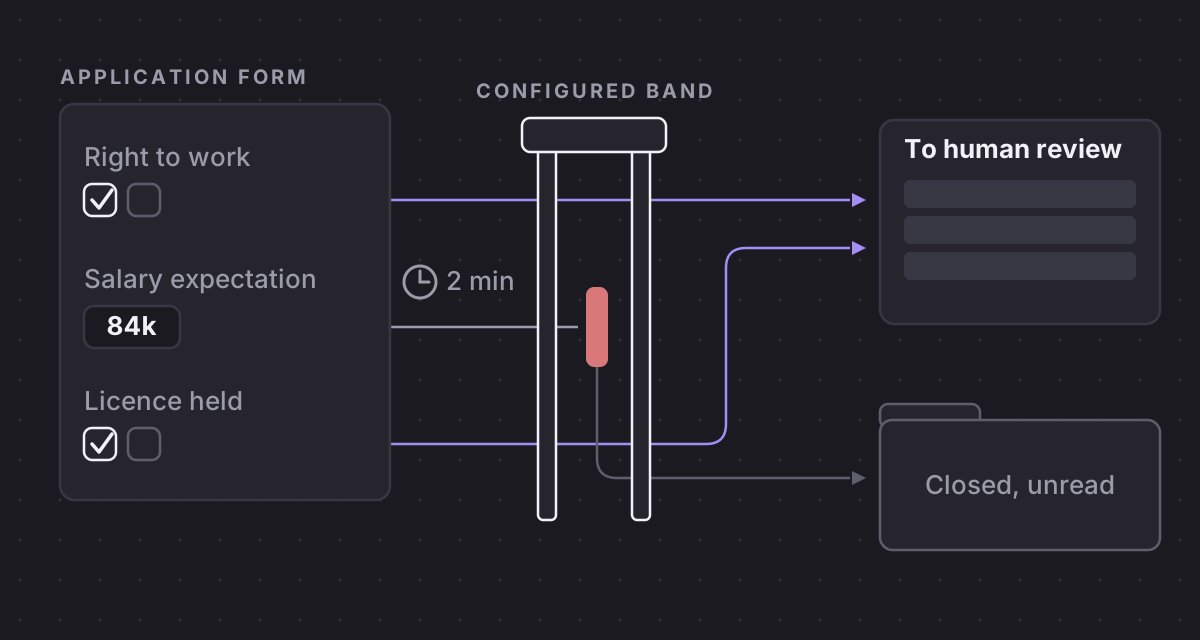
The specifics vary by country. A United States form asks about work authorisation, a British one about right to work, and roles elsewhere may knock out on visa sponsorship, driving licences, security clearance or notice period. Salary bands are a quiet killer everywhere: type a number above the configured ceiling and the door shuts without ceremony.
The defence is unglamorous. Read every question literally, answer honestly, and take particular care with anything involving a number or a legal status. This is the one place in the pipeline where a single field genuinely ends an application on its own.
You can sometimes spot a knockout after the fact. A rejection that arrives within minutes of submitting, at any hour, is almost always a knockout answer or a missed required field, since humans do not review applications at three in the morning. A rejection that arrives days later, often batched with hundreds of others, means a person worked through the pile and your record did not make the cut. Recruiters can usually still see knocked-out applications in the system, but in practice nobody reopens that folder.
The human in the loop nobody blames
Strip away the myth and the knockouts, and what actually kills applications is mundane. Formatting the parser cannot read produces a mangled record with missing dates or vanished contact details. Missing search terms means the record is never retrieved, because recruiters search resumes rather than read them. And a screener working through hundreds of records at a few seconds each will skip anything that fails to register immediately.
The rejection email is automated, which is exactly why the robot takes the blame. But the email is a template fired by a status change, and in the standard flow a person made that change. The machine wrote the letter. It did not make the decision.
None of these failures announces itself. The mangled record does not send you an error message, and the unretrieved record just sits there. From the outside, all three look identical to the mythical robot rejection, which is how the myth keeps its power.
What to fix if you really are being screened out
Blaming the robot is comforting precisely because it removes the fix. If an inscrutable algorithm rejects everyone, nothing you change matters. Once you accept that a human working at speed is the real filter, tailoring and keywords come back under your control, and the work has a point again.
The fixes rank in order of mechanism. First, make the record parse cleanly: single column, standard headings, contact details in the body of the page, no text trapped in tables or images. Second, mirror the posting's vocabulary for skills you genuinely hold, so searches actually retrieve you. Third, answer knockout questions with care, because they are the one true auto-reject. Fourth, front-load your strongest material for the six-second scan.
You can verify the first of these directly instead of guessing. ApplyHustle's free check lets you see your resume the way the ATS sees it, which settles in one look whether parsing is your problem.
There is one more reason to drop the robot story. It makes you optimise for the wrong reader. Resumes written to beat an imaginary algorithm fill up with repeated keywords and strange phrasing, and then a human reads them. Write for the person, in the vocabulary of the posting, on a layout the parser can carry faithfully, and both audiences are served at once. The robot is a filing cabinet with a search box. Stop fighting the cabinet and start writing for the person opening the drawer.