'Tell me about yourself' was never about you
It's asked first because they haven't studied your resume. Answered as autobiography, it wastes the one moment where you control the agenda.
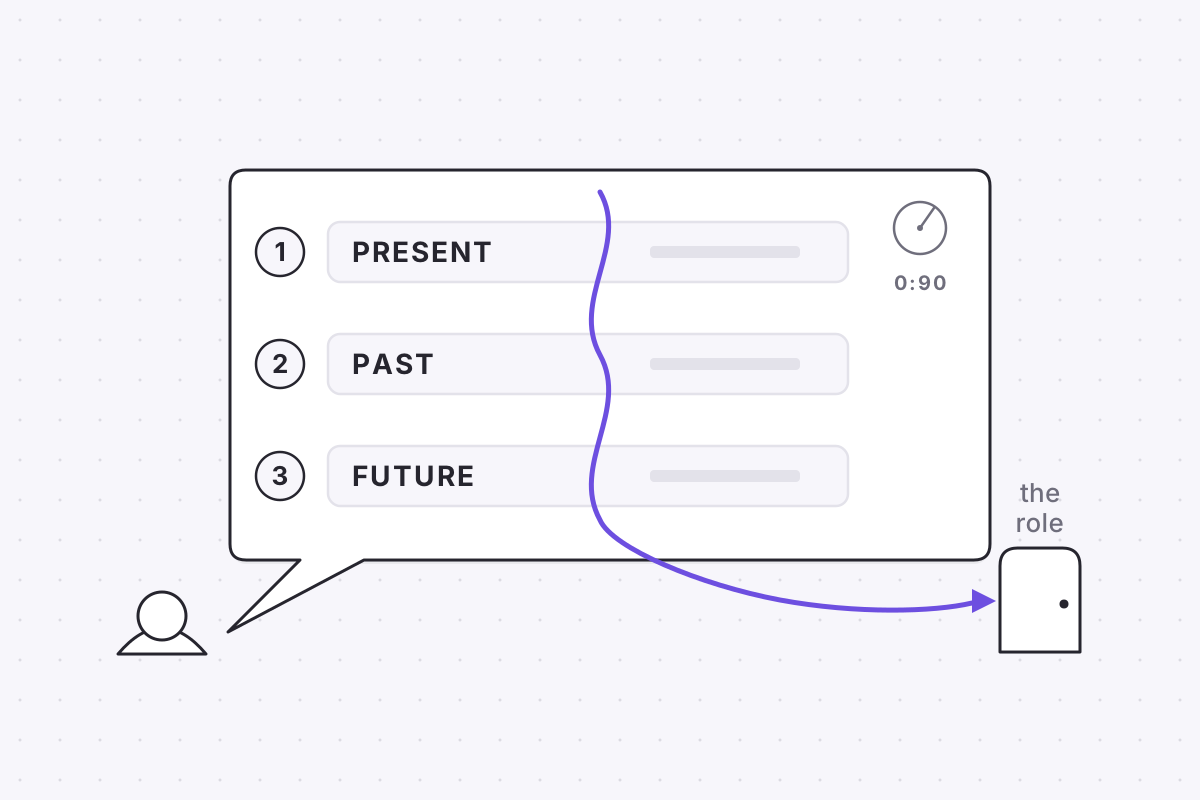
It is the first interview question nearly everyone meets and nearly nobody prepares, on the theory that talking about yourself needs no rehearsal. That theory fails in interview rooms every day. Knowing how to answer "tell me about yourself" has little to do with self-description and everything to do with giving a briefing, and briefings are built in advance, not improvised.
Start from an unglamorous fact: interviewers often walk in having skimmed your resume rather than studied it. Ten minutes between meetings, a glance at your last two roles, maybe a note about a gap. The question is their request for a briefing, and the real question underneath is shorter and colder: why should I keep listening?
Why interviewers open with it, and what they're really asking
The opener does three jobs for the interviewer. It buys them a minute to settle and find their notes. It tests whether you can organise information under light pressure, which is a fair proxy for how you would brief a client or a manager. And it shows them what you consider important, because whatever you choose to say first is a choice, and they know it.
What it is not is an invitation to recite your life in order. Chronology is the resume's job, and the resume is already on the table. An interview introduction that starts with your degree and marches forward year by year tells the interviewer one thing above all: this person has not thought about what I need from the next hour.
Present, past, future: how to answer "tell me about yourself"
The reliable structure is the present, past, future method, and the order is the point. Open with your current situation, one or two sentences that establish what you do and at what scale. Then the relevant history: not everything that happened, but the two or three moves that explain how you got here. Close with why this role is the logical next step, which turns the whole answer from a recap into an argument.
Most tell me about yourself examples online fail by being generic enough to fit anyone. Here is one with the right shape. It is invented, but the proportions are what matter.
"I'm a data analyst at a logistics company in Rotterdam, where I own the reporting our operations team uses to plan around 2,000 deliveries a day. I came to it sideways: I trained as an economist, spent two years in market research, and noticed the work I kept volunteering for was the data pipeline, so I retrained in SQL and Python and moved across formally. Over the past year I've automated most of our weekly reporting, which gave me room to build a delay-prediction model that operations now checks every morning. That is the work I want more of, and it is why this role stood out: the same problem, forecasting under messy real-world constraints, at ten times the scale."
Present in two sentences, past in two, future in two, and every clause aimed at the role. No hobbies, no childhood, no claim to being a passionate team player.
Ninety seconds, not nine minutes
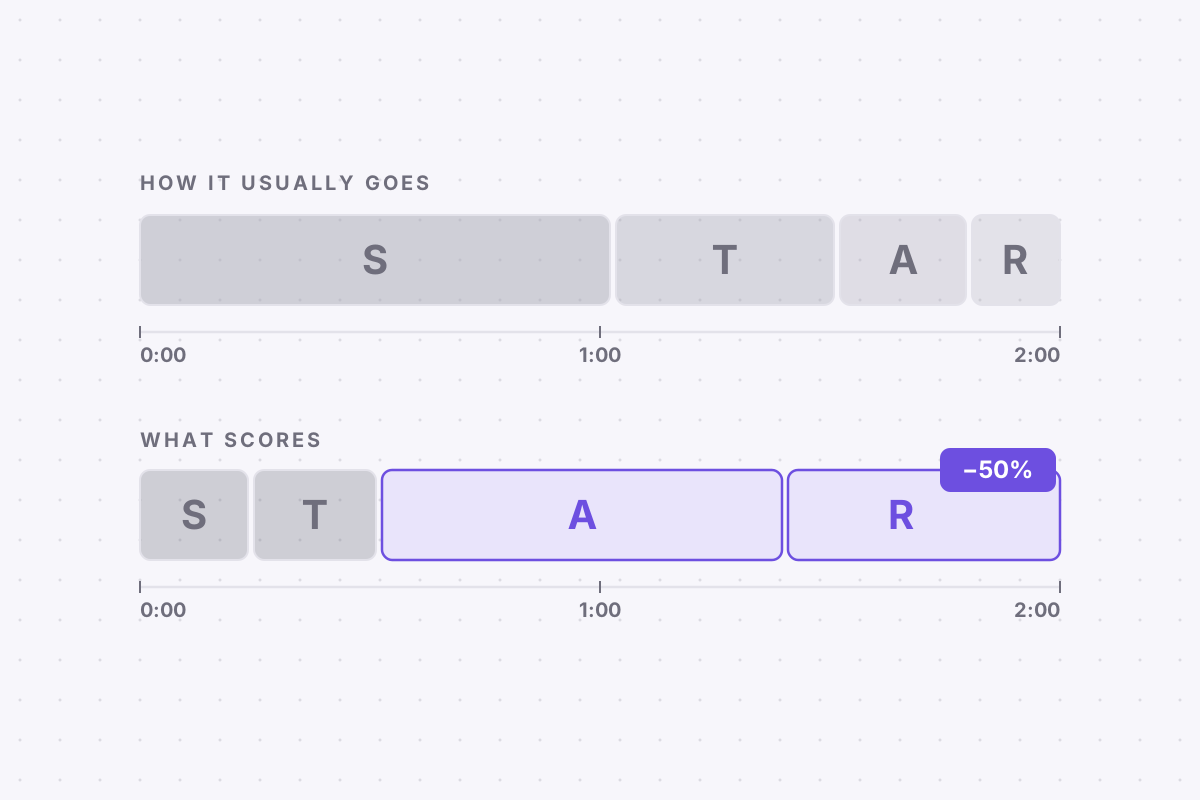
A strong answer runs 60 to 90 seconds spoken. Past the two-minute mark the interviewer stops listening and starts planning their next question, and everything you say after that point is delivered to nobody.
Ninety seconds is roughly 200 spoken words, which imposes a useful discipline: selection. You are not summarising a career, you are choosing the three facts that make the next hour go well. Draft the answer, count the words, and cut until the count behaves. What survives the cut is, by definition, what you actually want them to know.
Delivery has a tell as well. If you hear yourself say "and then" for the fourth time, you have slipped from briefing into chronology. Stop, land the future beat, and hand the conversation back. Finishing crisply, a beat before they expect it, signals confidence more reliably than anything you could add.
Your answer sets the agenda for the next five questions
Interviewers follow up on what you give them. Mention the prediction model and you will spend ten minutes on the prediction model, so make sure it deserves ten minutes. Every project, market or skill you name in the opener is a flag planted for the rest of the conversation.
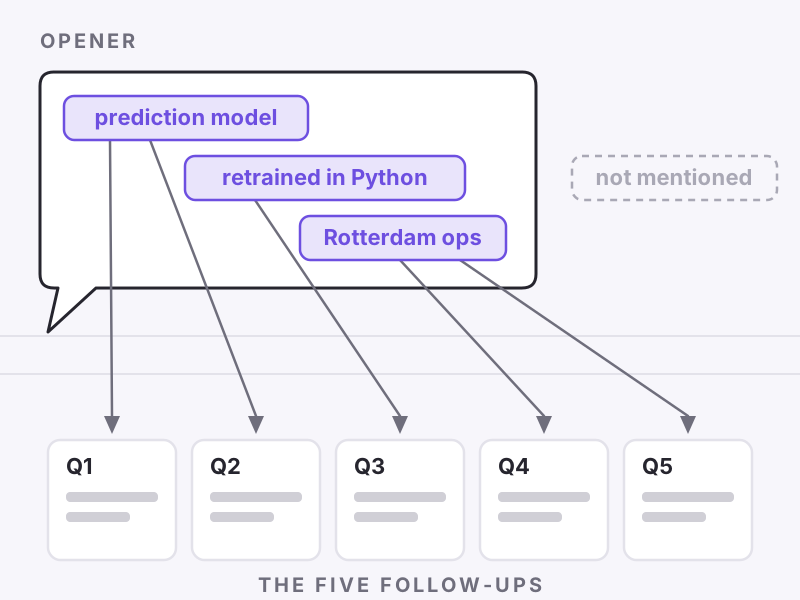
So work backwards. List the three stories you most want to tell, the ones you have already built, quantified and timed. If you have done the work of assembling a story bank of six well-chosen STAR stories, the opener becomes a menu of those stories' headlines, and the follow-up questions become requests for material you have already rehearsed. You are not hoping the right questions come up. You are ordering them.
The same logic runs in reverse. Emphasise a topic you would rather avoid, and you have just booked the follow-up questions on it.
Rehearsing it without sounding rehearsed
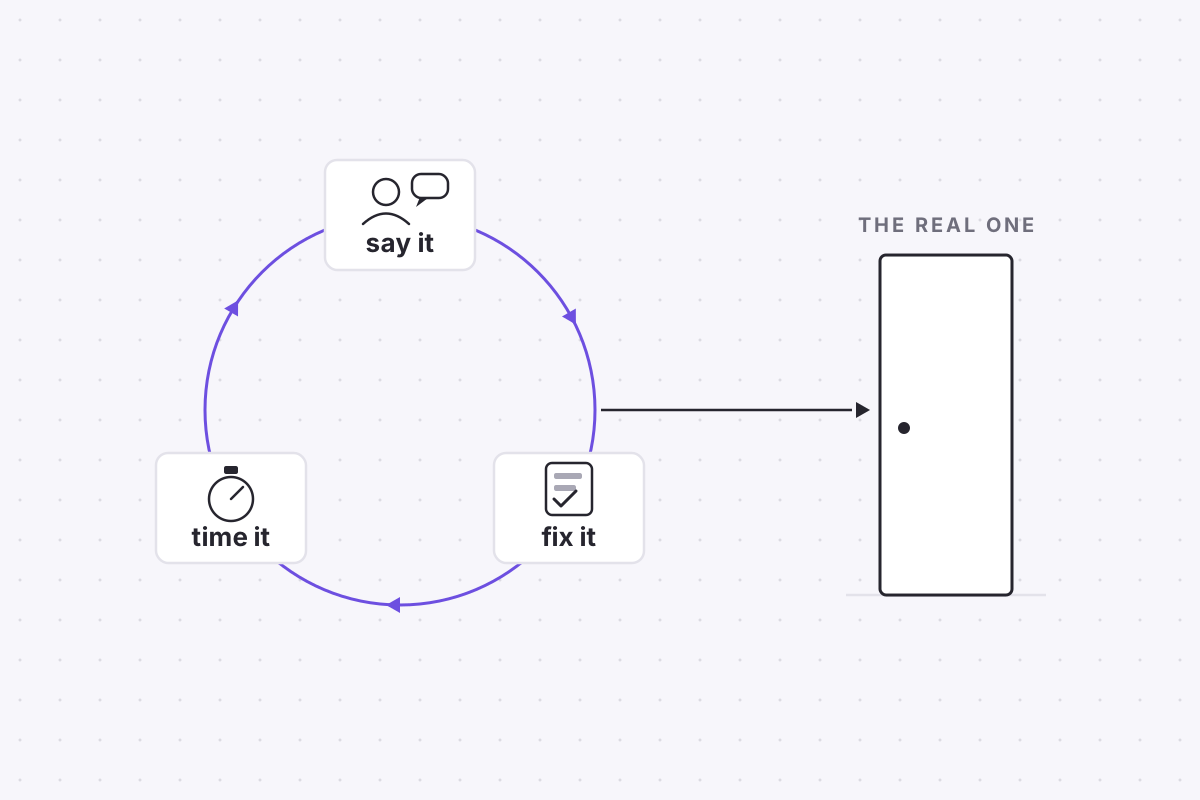
The distance between concise and rambling is not talent. It is whether the answer has been said aloud before, timed, and trimmed. Practise the three beats rather than a script, because memorised sentences snap under the smallest interruption while a memorised structure bends. A mock interview is the natural venue for this, and ApplyHustle's AI Mock Interview will time your opener and tell you where it drags; your first interview shouldn't be the real one in any case.
You will face this question in nearly every interview for the rest of your working life. Ninety seconds, built once and refreshed for each role, is the highest-return rehearsal available to you. The question was never about you. It was always about whether you can tell them why they should keep listening, and now you can.