Automate your applications? Half of them.
What auto-apply tools do well, where they quietly wreck a search, and why we keep the engine we built for it switched off.
Strip a modern job application down and it separates into two kinds of work. There is judgement: choosing the role, deciding whether the posting's 'stakeholder management' is your 'client coordination', working out what to say about sponsorship. And there is typing: creating another portal account, re-entering the resume the portal just failed to parse, confirming for the hundredth time that you are authorised to work in the country you live in. The first kind produces interviews. The second produces nothing but the right to be considered.
So when a tool offers to apply for you, the appeal is not laziness. It is the accurate suspicion that most of last night's application session was clerical. Automation is the correct answer to clerical work; it has been in every other trade for a century. The complication is that applying is not one task. It is a clerical layer wrapped around a small core of judgement, and a tool that automates the whole thing has automated the part that was never the problem along with the part that was.
Should you automate your job applications, then? Part of them, yes, and the part most tools sell hardest, no. Here is the line between the two, and a disclosure about our own product that is also the argument.
The drudgery a machine genuinely does better
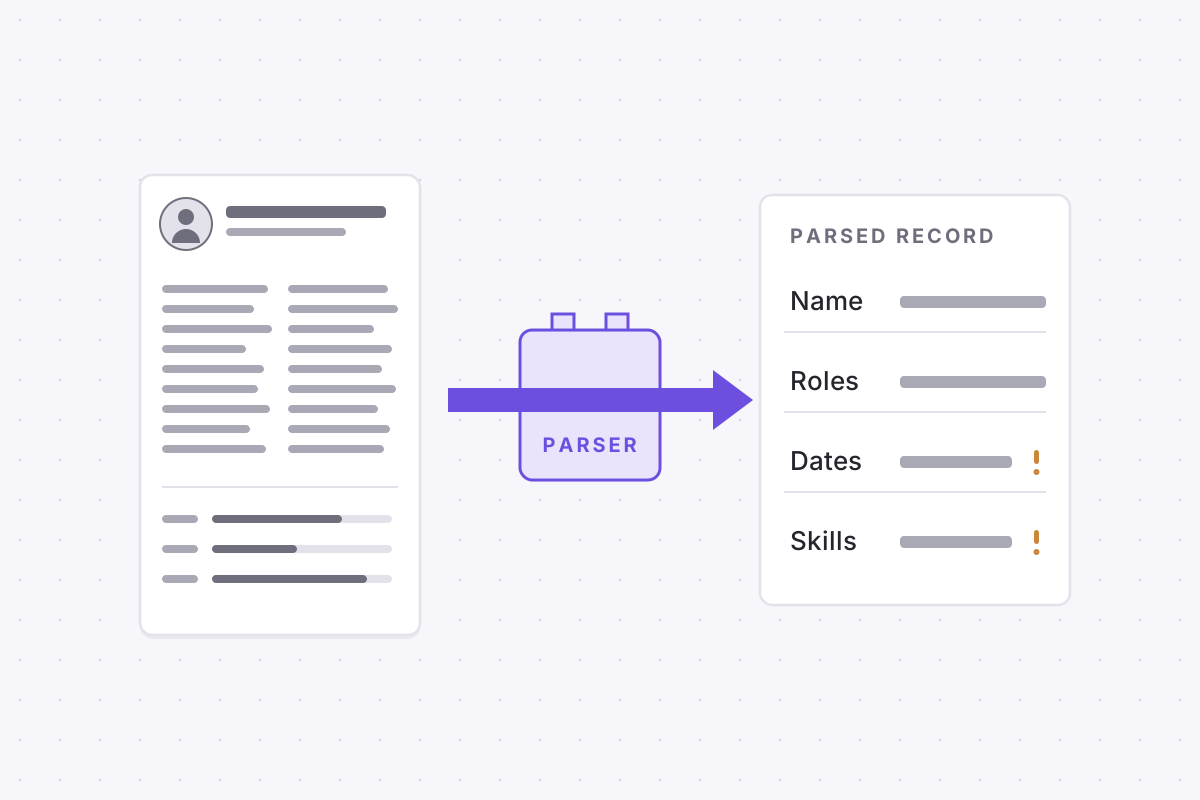
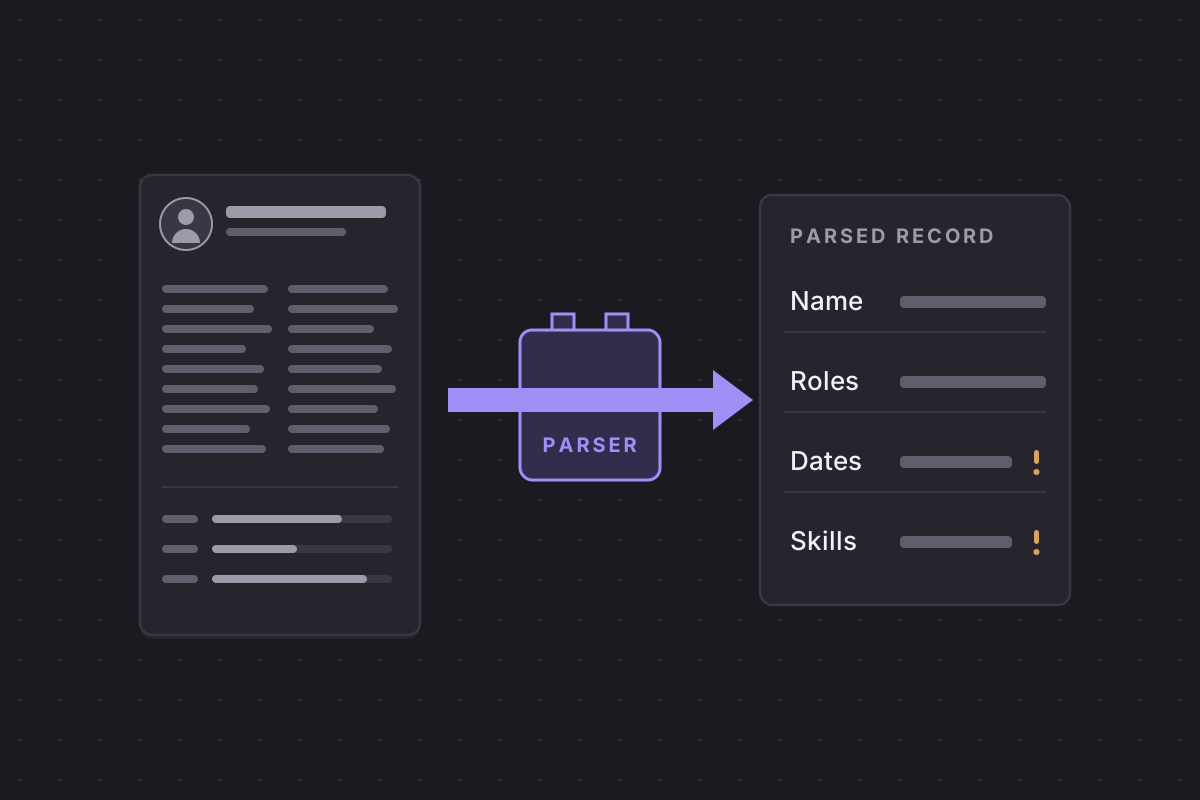
Every employer runs a different portal and none of them agree on anything. One wants an account before it will show you the form. One parses your resume, scatters it into the wrong fields, then asks you to fix its work by hand. One asks for your full education history even though it is attached, in order, in the PDF one field above. Your details never change between these portals; only the boxes do. Filling known values into differently shaped forms is close to the definition of work a machine should be doing instead of you.
- Re-entering a resume the parser mangled, into fields the last portal called something else.
- Answering the standard screening questions yet again: work authorisation, sponsorship, notice period, relocation, expected salary.
- Watching your inbox for the verification code some portals demand before the application counts as submitted at all.
Notice what that list has in common: none of it involves a decision. The answers exist before the form is opened, a correct fill is objectively checkable, and doing it for the hundredth time makes you worse at it, not better, because boredom is where typos come from. This is the layer where automation is not a shortcut but an accuracy improvement, and where saved screening answers in particular earn their keep: you write the sponsorship answer carefully once instead of quickly forty times.
Where the automation has to stop
Tailoring is the first casualty. Recruiters retrieve candidates by searching for the vocabulary of their own posting, which means the resume adjustments that get you found are specific to each role. A tool that fires one generic resume at every opening has not automated tailoring; it has automated skipping it. Each copy arrives at the bottom of a pile that popular postings stack hundreds deep, indistinguishable from the majority, and sending more copies faster does not move any single one of them up.
Knockout questions are the second casualty, and the sharper one. Sooner or later a form asks something outside the saved list: whether you hold a specific licence, whether you have worked under a named regulator, why you want this company. A tool has three options. Leave it blank, and the application is incomplete. Stop and ask you, which is honest but no longer hands-free. Or guess, which is the option that should worry you, because a guessed answer on an application is not a bug. It is a statement you did not make, submitted under your name.
Guess wrong in one direction and you are screened out of a role you qualified for. Guess wrong in the other and you advance on a claim that is not true, which unravels at the exact moment it matters most: in the interview, in the background check, in the first month of the job. There is no version of a fabricated screening answer that serves you.
Volume without fit is negative-sum
Now scale the failure. The relevant openings in your market, at your level, are a finite pool, replenished weekly but not infinite, and an unsupervised tool can work through the entire pool in a couple of weeks. Every mismatched application it sends is not a lottery ticket. It is a foreclosed opportunity, because the posting it burned badly this week is often at a company you would have applied to properly next month.
And employers remember, because their systems do. Apply once and you become a record in that company's applicant tracking system, keyed to your email, visible to every recruiter who opens your file, along with every application you have made there before. A sixth mismatched application in five weeks reads as exactly what it is. Few companies bother with a formal blacklist; few need one, because your history at each company follows your name there. Volume without fit spends both at once: the finite pool of openings, and the way your name reads inside the companies you actually wanted.
The honest metric makes the damage visible. Count responses, not sends. A search that fires five hundred automated applications and draws three replies is not twenty-five times more productive than one that sends twenty tailored ones and draws four. It is worse on the only number that pays out, and it got there by burning the pool. This arithmetic is also why we are cautious about our own product.
We built an auto-apply engine. It is switched off.
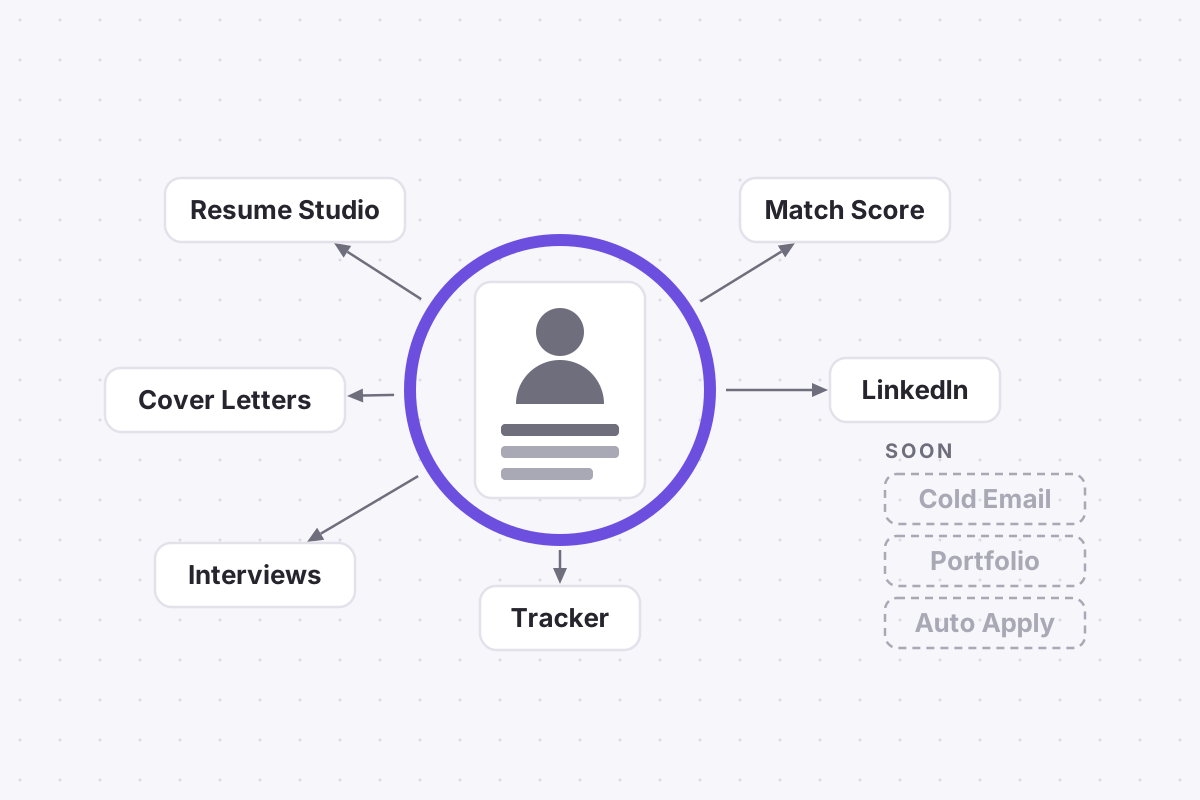
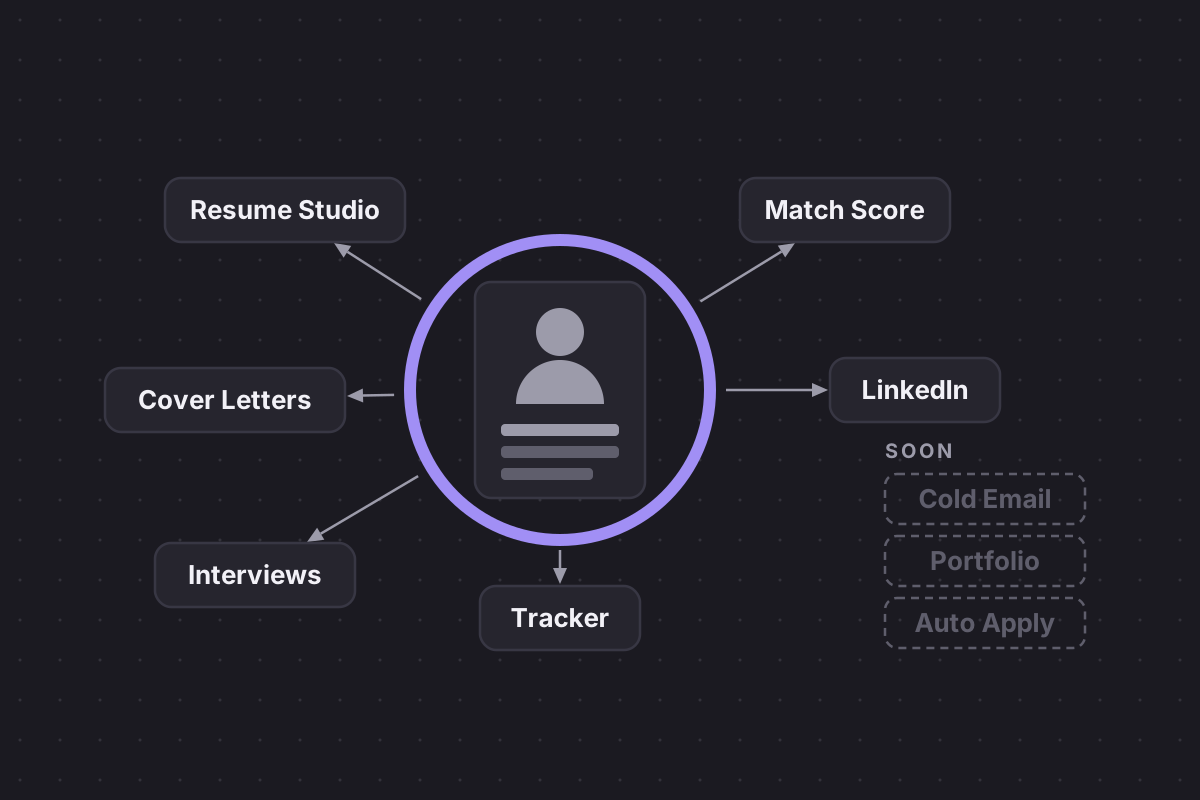
The disclosure: ApplyHustle has built an auto-apply engine. It has written adapters for sixteen applicant tracking systems, Greenhouse, Lever, Workday, Ashby, iCIMS and eleven more, so it fills each portal's fields where that portal actually keeps them. It reuses a saved list of answers to sixteen standard screening questions, a list you can read, edit and delete at any time. It can even handle the verification emails some portals send, through a mailbox connection that uses an app password rather than your real one and opens the mailbox read-only. The number of applications it has sent on a real candidate's behalf is zero.
It is switched off on purpose, and the reason is everything above. Every other tool we ship produces something you read before anything happens: a score, a letter, a rewrite. A bad draft costs you a mouse click. Auto Apply acts. A bad application costs you an employer, and you may never learn it happened. A tool with that failure mode has to clear a higher bar than looking finished, and ours has not cleared it yet.
The bar is specific. Nothing sends without a per-job preview and eligibility check, so a submission is never the first time you see what goes out. The readiness check that unblocks the engine runs server-side and names the exact profile fields still missing. Volume is capped per day, and the worker refuses to start at all when it is half-configured, rather than fail one application at a time. All of that is built. We still have not set the switch, there is no date for setting it, and we are not going to invent one. If that sounds excessive, re-read the knockout-question section. For a tool that signs your name, the restraint is not a delay in the product. It is the product.
What to automate this week, and the test for the rest
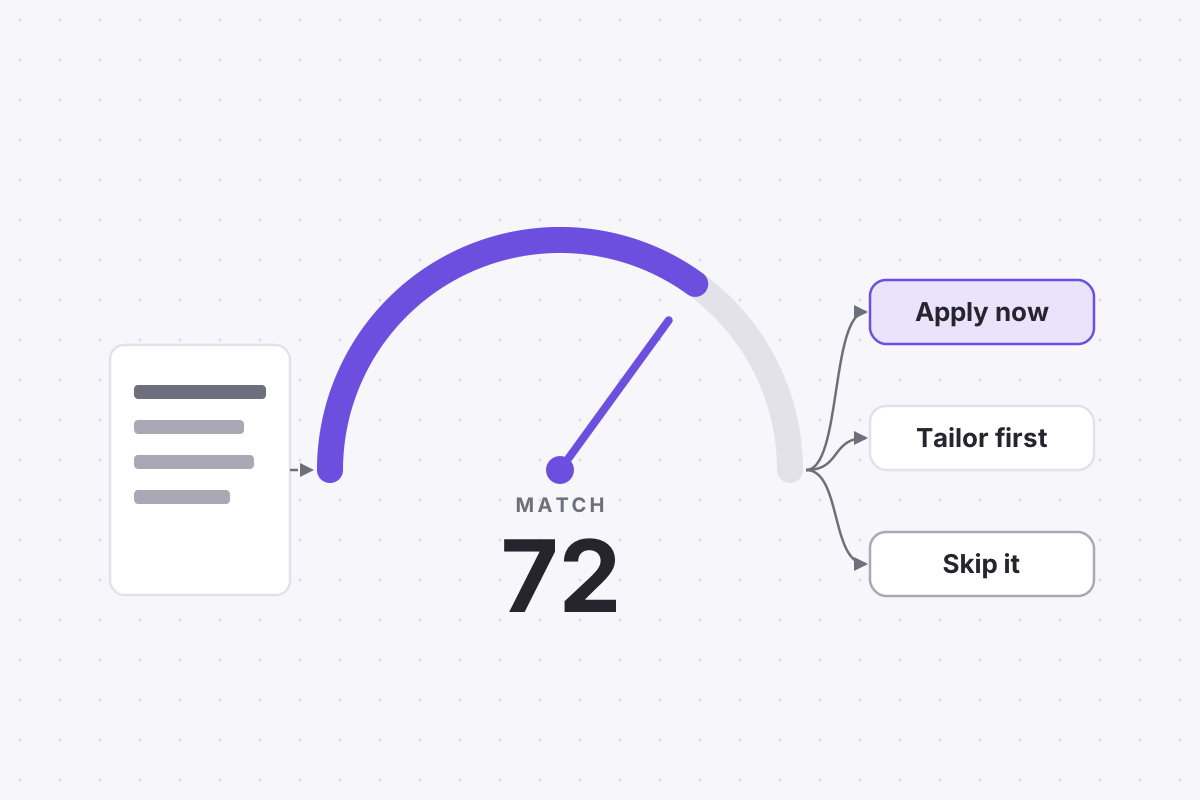
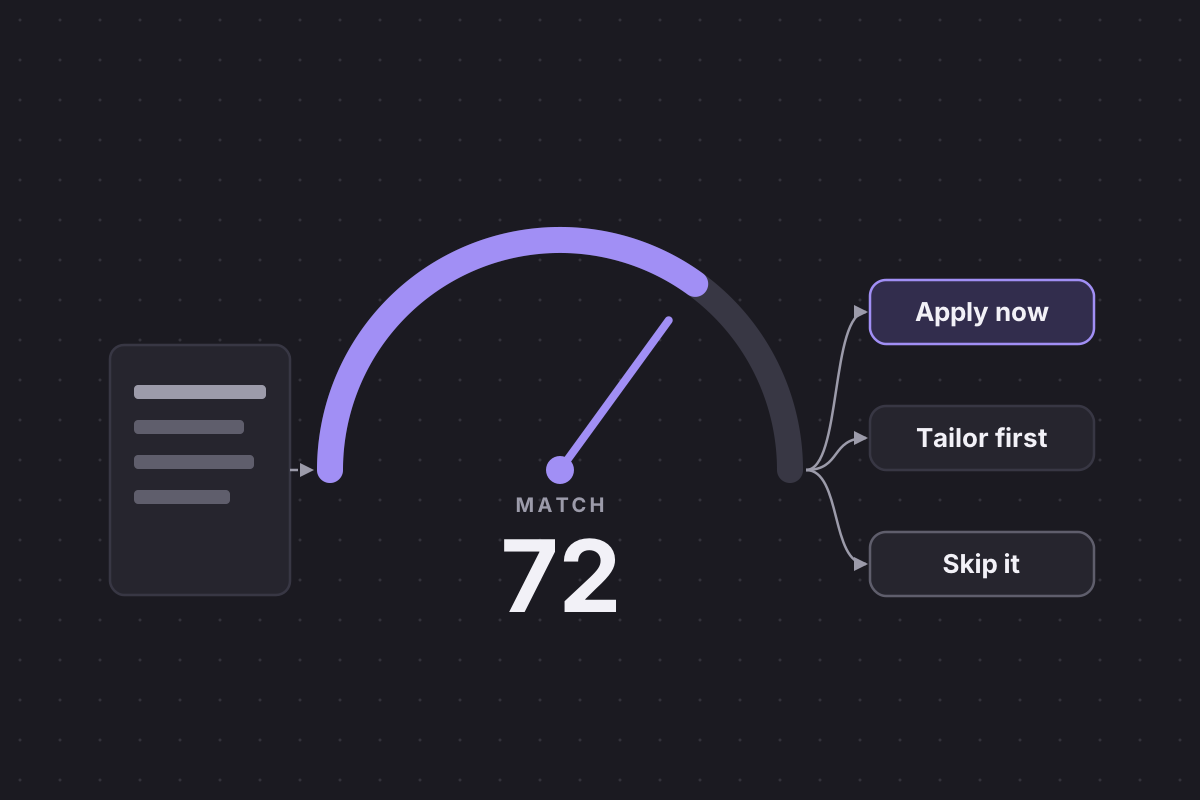
None of this requires waiting on anyone's engine, ours included. Automate below the judgement line today with tools nobody had to build. Write your screening answers once, carefully, in a document you paste from, so the sponsorship question gets your considered answer at eleven at night. Log every application and what you sent, so your response rate is a number you can read instead of a feeling. Use a match score to decide which roles deserve your time before you spend it. Then do the twenty-minute tailoring pass yourself, because that is the judgement, and it is where the interviews come from.
- Will I see each application before it goes, or at minimum exactly what it will send for each job?
- What does it do when a form asks a question it has no saved answer for: stop, or guess?
- What caps the volume, and what stops it applying to a role I would never take?
Ask those three questions of any tool that offers to apply for you, including ours when the switch is finally set. A tool with good answers is automating your typing. A tool without them is spending your name, at scale, unsupervised. Keep the judgement. Delegate the typing. That order is the whole answer.