Your first interview shouldn't be the real one
You wouldn't sit an exam without a practice paper, yet interviews get no rehearsal. Why answering out loud changes everything about them.
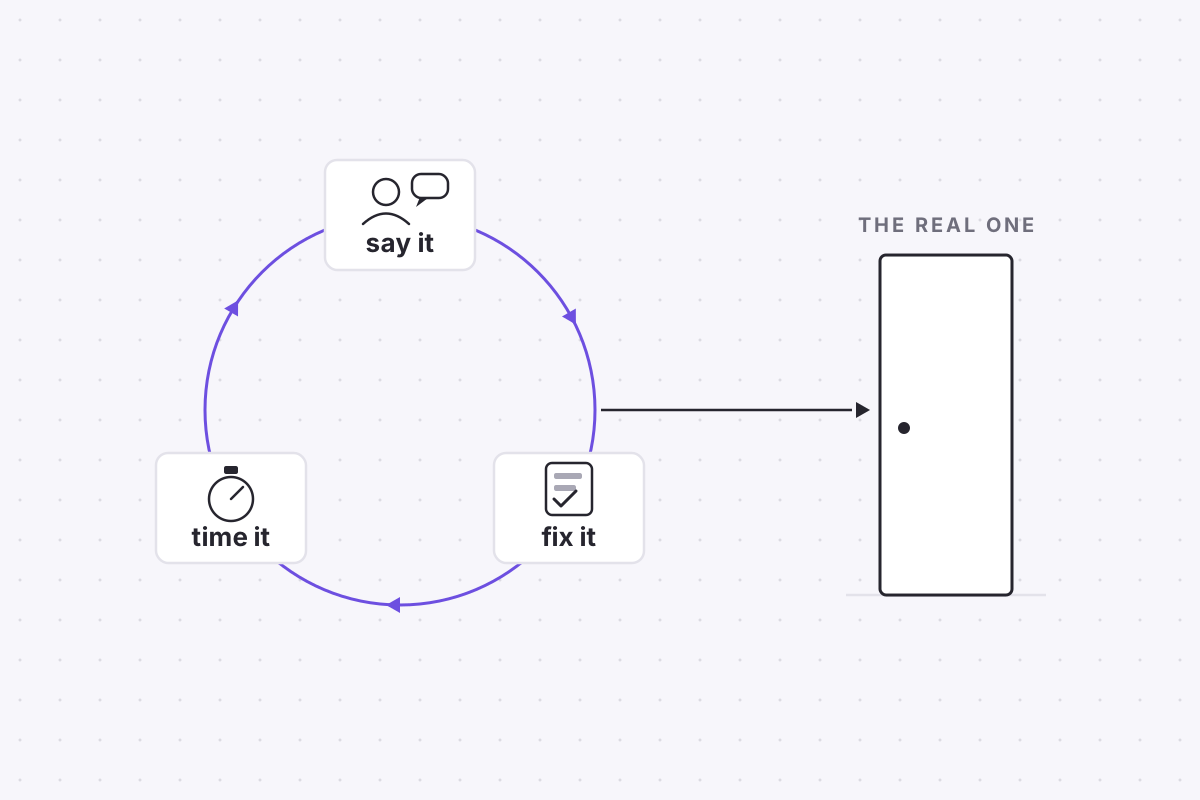
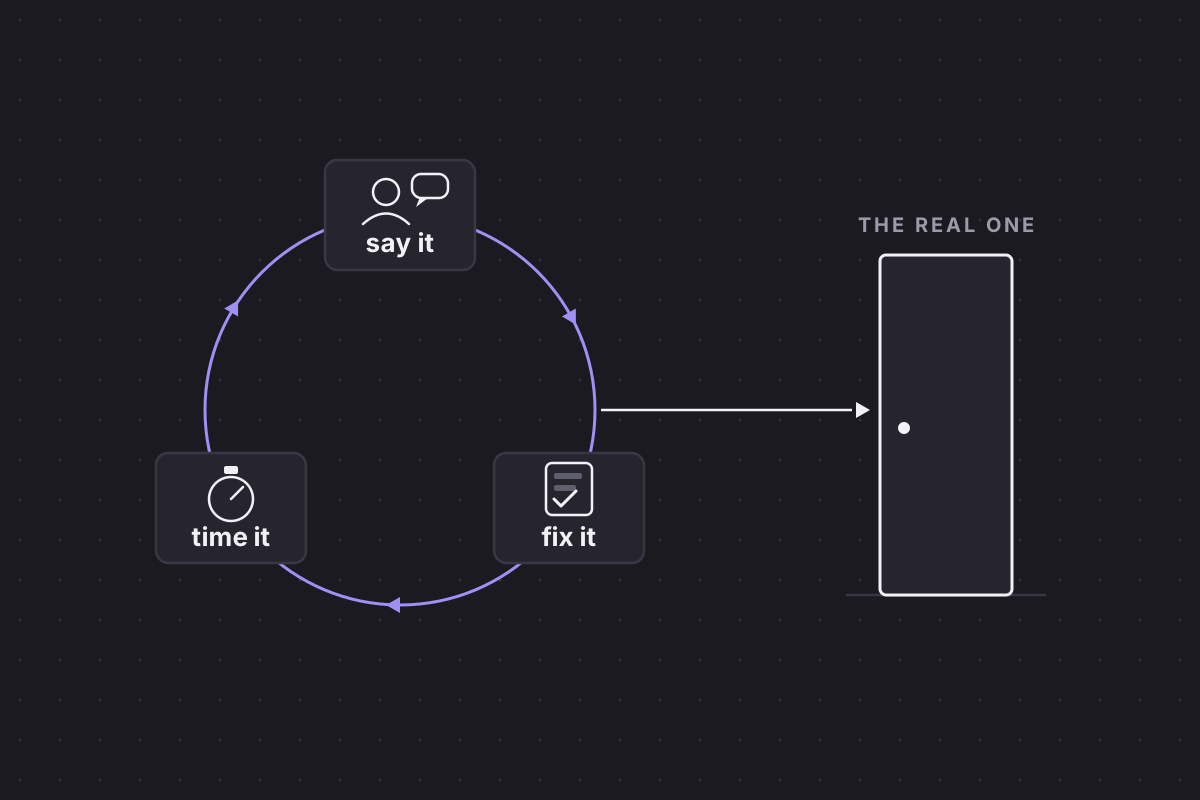
Most people prepare for interviews the way learner drivers would prepare by reading the highway code. They study question lists, annotate the job description, and think through what they would say. Then the real interview arrives and doubles as their first rehearsal. Mock interview practice exists to break that pattern, and the case for it rests on mechanics, not motivation.
Real interviews are also the most expensive rehearsal venue you will ever use. Each one costs an application, a screening call and often weeks of waiting, and the feedback at the end is a yes or a silence. Spending that scarce inventory on discovering that your opener runs long is poor economics when the same discovery is available at home for nothing.
The distinction underneath is between recognising a good answer and producing one. Reading a model answer feels like preparation because it is fluent on the page. Producing your own version, out loud, under mild pressure, is a different task performed by a different skill, and it is the one the interview actually tests.
Thinking about answers isn't practising them
Retrieval practice is one of the best-established findings in learning science: you strengthen a skill by producing it, not by re-reading it. Students who test themselves outperform students who re-read the textbook, across ages and subjects, in study after study. An interview is a spoken performance with the same rule attached.
The pressure matters as much as the production. Answering aloud while something is mildly at stake, a timer, a listener, a recording you will have to play back, sits far closer to the real event than answering in your head, and the fluency it builds transfers. Silent mental rehearsal skips both ingredients and flatters you on top. In your head, the transitions are smooth and the number is always on the tip of your tongue.
Spoken, the same answer sprawls, doubles back, and reaches for a figure that is not there. The gap between the head version and the spoken version is exactly what the interviewer experiences, and you cannot measure it without opening your mouth.
What out-loud rehearsal changes: fluency, timing, filler words
Certain failure modes are invisible on paper and only surface in speech. Three of them cost candidates the most.
- Length. Answers that felt tight in your head routinely run past two minutes when spoken, which is the point at which interviewers stop listening and start planning their next question.
- Filler. "Sort of", "kind of", "you know" and the long "um" before every clause are inaudible to you and prominent to everyone else, and they only fall away with repetition.
- Endings. Stories rehearsed silently often trail off before the result, because in your head the outcome is obvious. Said aloud, the answer simply stops, and the interviewer is left holding an anecdote with no point.
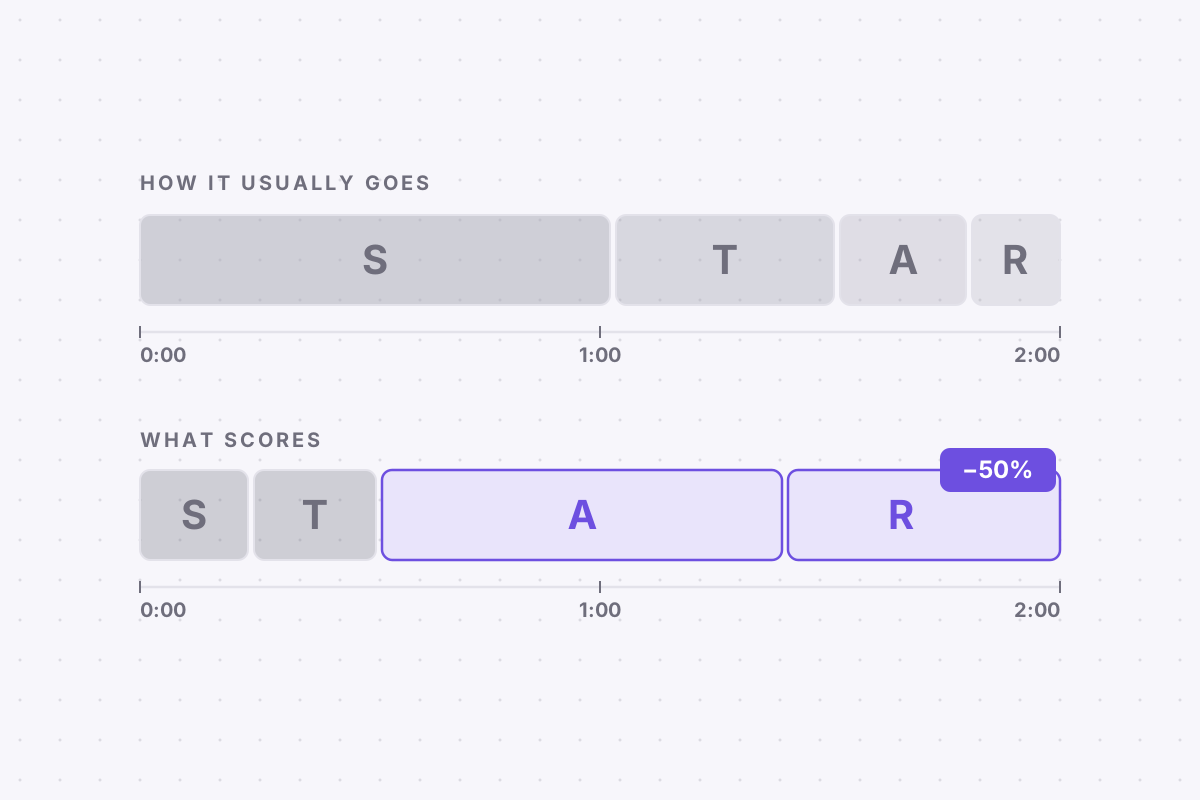
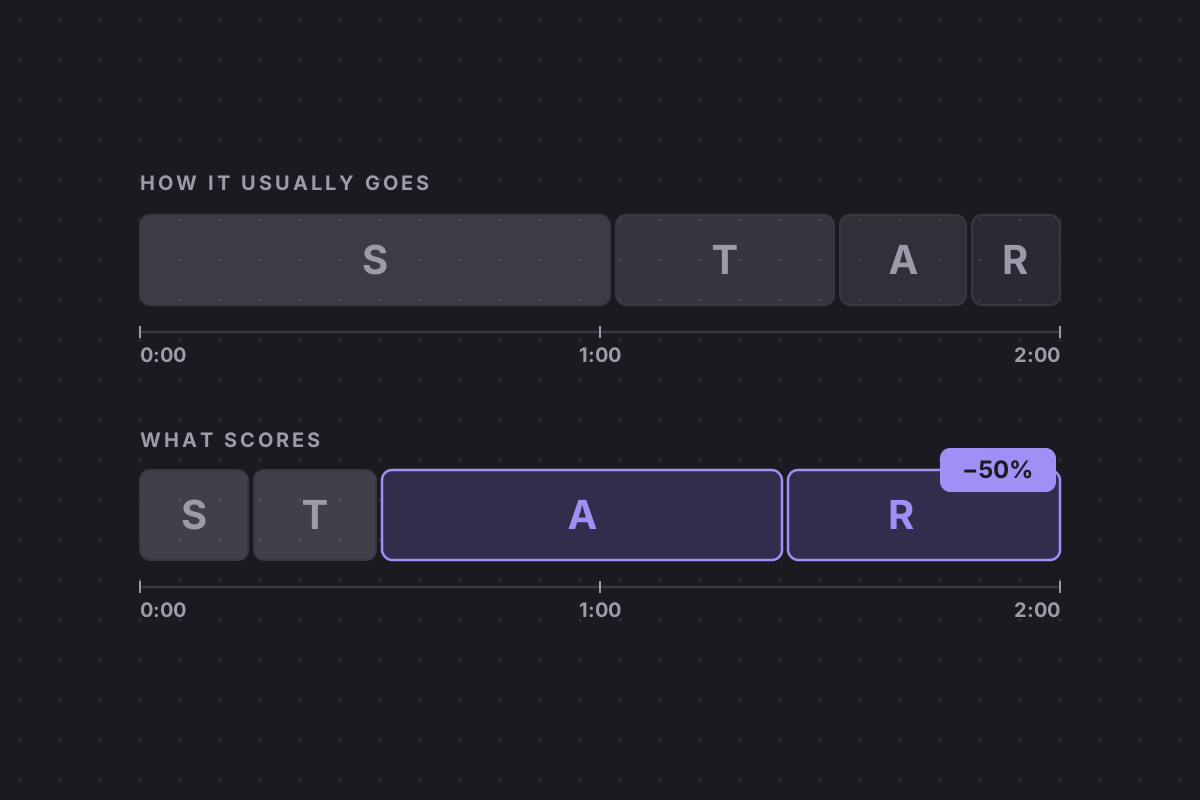
All three have the same cure. Say the answer, time it, notice where it broke, say it again. Two timed repetitions of a story teach you more than an evening of reading about it. Story quality still has to be settled first, though. As the piece on why your STAR stories, not the framework, are the problem argues, rehearsal polishes material; it cannot create it.
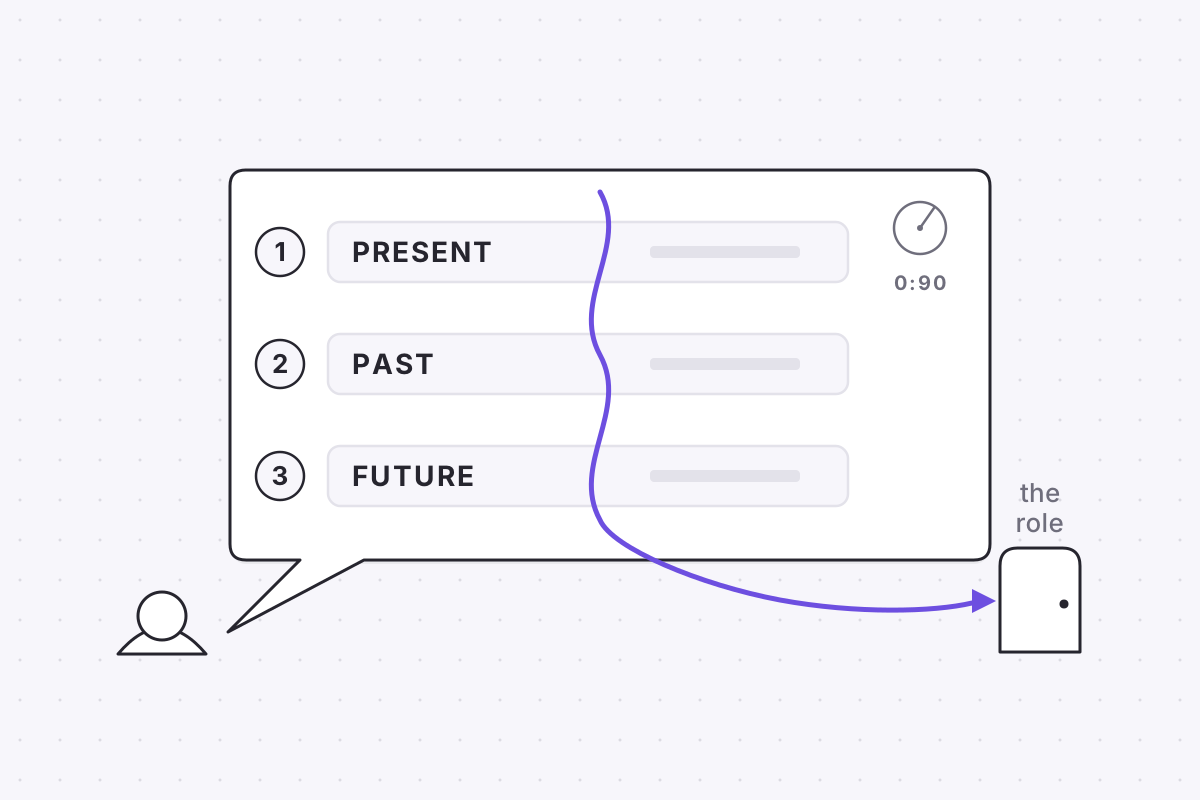
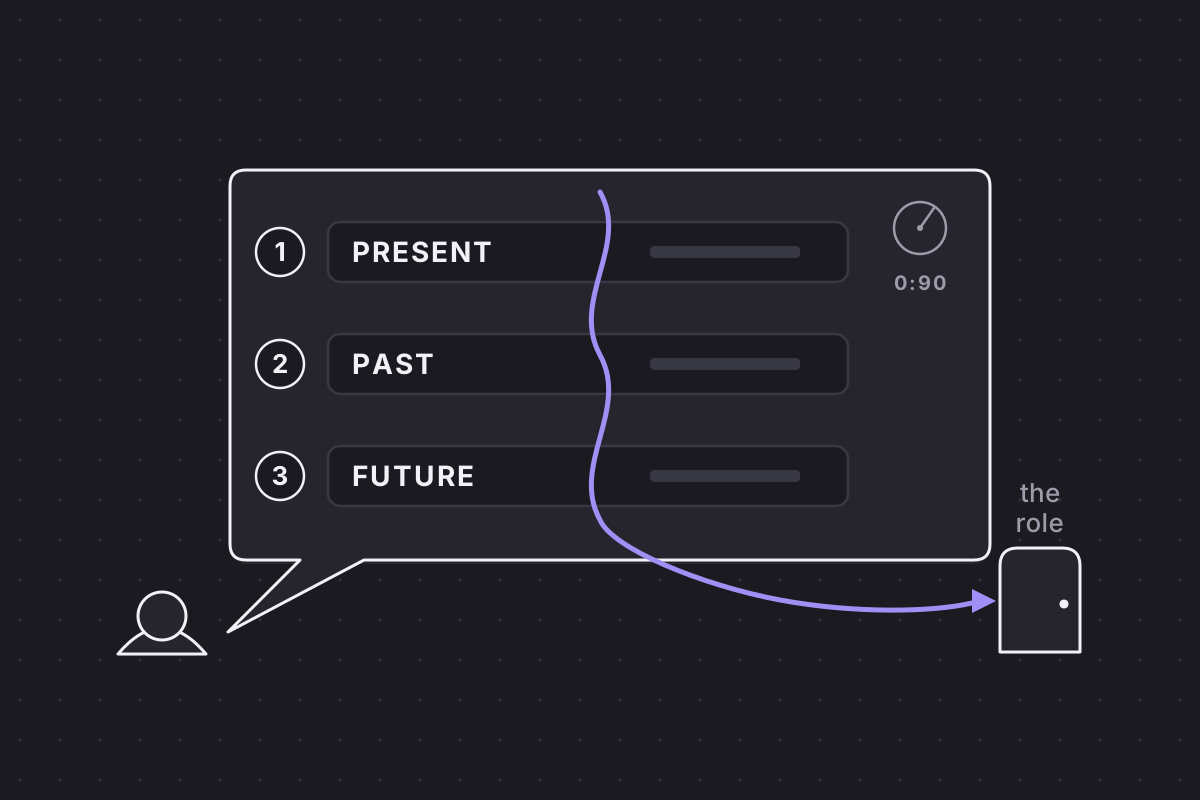
Timing deserves its own pass. At a natural speaking pace, ninety seconds holds roughly 200 words, which is less than most people expect. Once you know that number you can edit on paper before you ever rehearse: a 450-word story is not a rehearsal problem, it is a cutting problem, and no amount of repetition will squeeze it into the slot.
The feedback problem: friends are too kind, mirrors say nothing
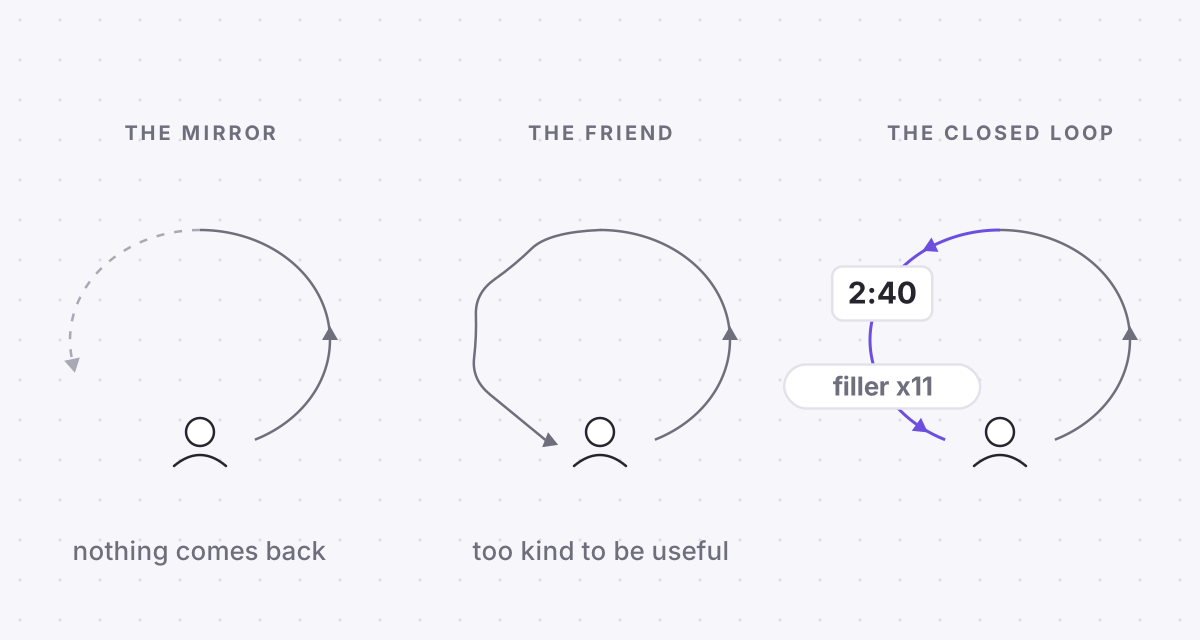
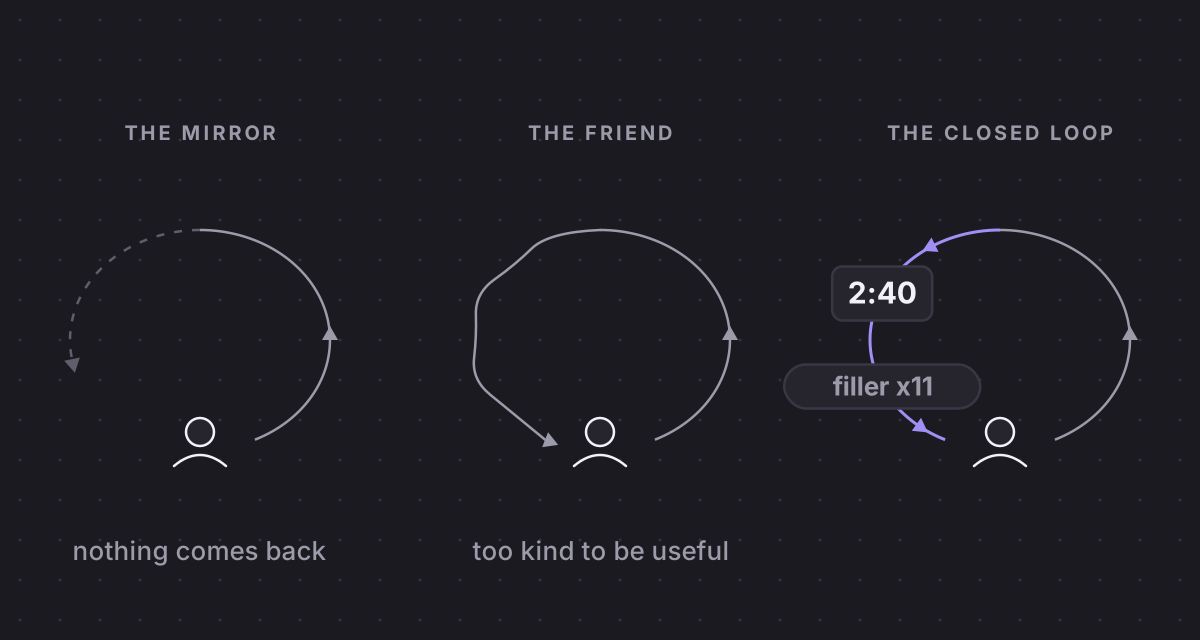
If out-loud rehearsal is the method, someone has to tell you how it went, and here the traditional options fail in opposite directions. Practising alone, to a mirror, generates output but no judgement. Recording yourself on a phone is better, and worth doing once for the shock value, but a recording still leaves the diagnosis to you, and you are the person least equipped to hear your own habits.
Practising with a friend adds an audience and subtracts honesty. People who like you are structurally bad at saying that your answer was ninety seconds too long and had no ending. They are also busy. Coordinating three rehearsal sessions in the week before an interview defeats most calendars, which is why the search for how to practise for an interview so often collapses back into more reading. The loop stays open: output with no feedback, or feedback too gentle to act on.
How an AI mock interview closes the loop
An AI mock interview fixes both halves at once. It asks role-specific questions rather than working through a generic list, so you rehearse the material your interview will actually contain. And it gives immediate, unembarrassed feedback: your answer ran to 2 minutes 40, your result went unquantified, you said "basically" eleven times. There is no scheduling cost and no social one. It is available at 11pm the night before, and it does not mind hearing the same story five times.
Repetition is where interview practice online earns its keep, because interview anxiety falls with exposure. The fifth run at "walk me through your resume" is calmer than the first, not because you became braver but because the question stopped being novel. Tools like ApplyHustle's AI Mock Interview let you buy that exposure cheaply, before an interviewer's opinion is attached to the outcome.
None of this replaces human judgement about your career. It replaces the missing rehearsal partner, which is the actual gap. A closed feedback loop run cheaply and often beats an open loop run rarely.
A one-week mock interview practice plan before the real thing
A workable week is modest, roughly three hours of actual work. Early in the week, run one full mock session and take the feedback without arguing with it. Midweek, review your story bank against what that session exposed: every story needs a number and an ending, and any story missing both gets fixed or dropped. A day or two before the interview, run a second mock session to confirm the fixes held. Then do one out-loud, timed run of your opener, because 'tell me about yourself' was never about you and deserves a rehearsed ninety seconds of its own.
Two sessions rather than seven is deliberate. Improvement comes from the change between attempts, not from the attempts themselves, and cramming ten runs into one evening produces a tired candidate reciting the same mistakes faster. Space the work, sleep between sessions, and let the second run measure whether the first one taught you anything.
What the week does not include is ten hours of reading question lists. Reading is the comfortable illusion of preparation; production is the real thing. Your first interview is going to happen this week either way. The only decision you control is whether it happens in front of the people holding the offer.