One page, six countries: resume rules that change at the border
Photos, length, personal details. The resume rules you learned are local customs, not laws. What changes when you apply across a border.
Should a resume be one page? The only honest answer is another question: one page where? The rule you are quoting was written for a specific market, and resumes travel far less well than the careers they describe. Advice that gets you shortlisted in Toronto can get you quietly binned in Berlin, and the reverse is just as true.
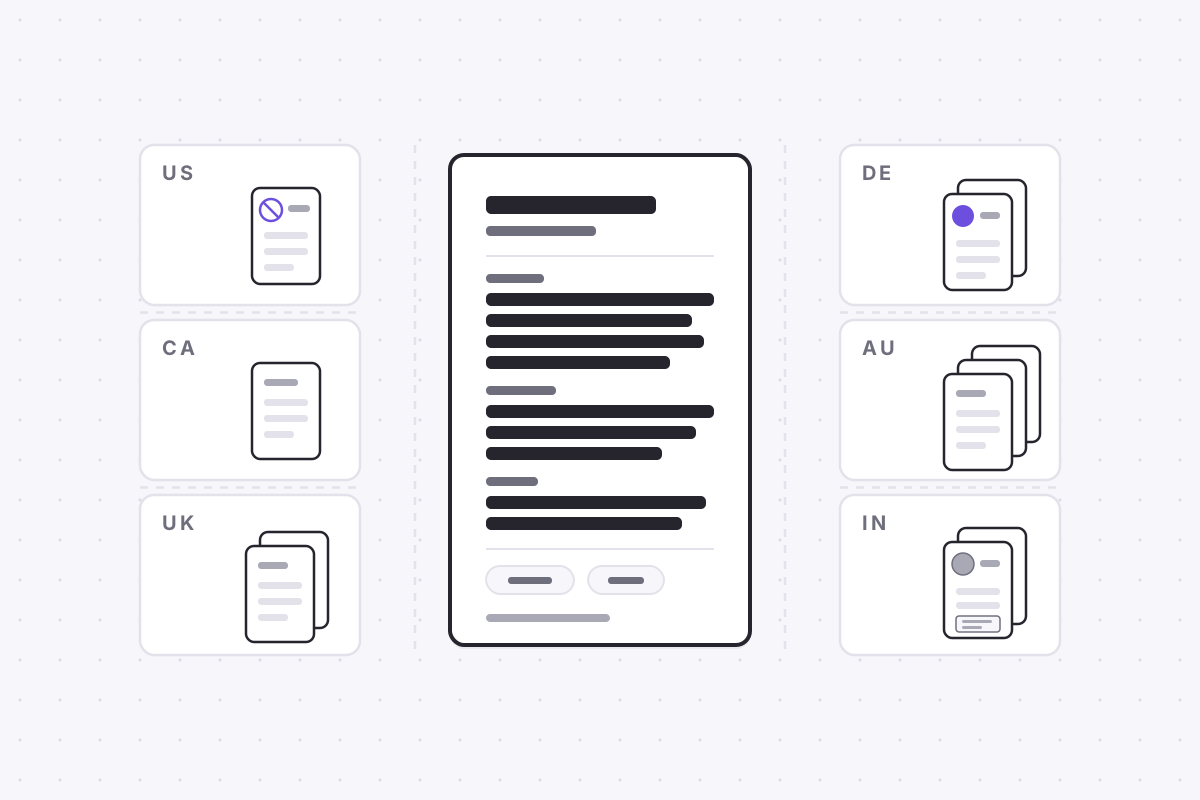
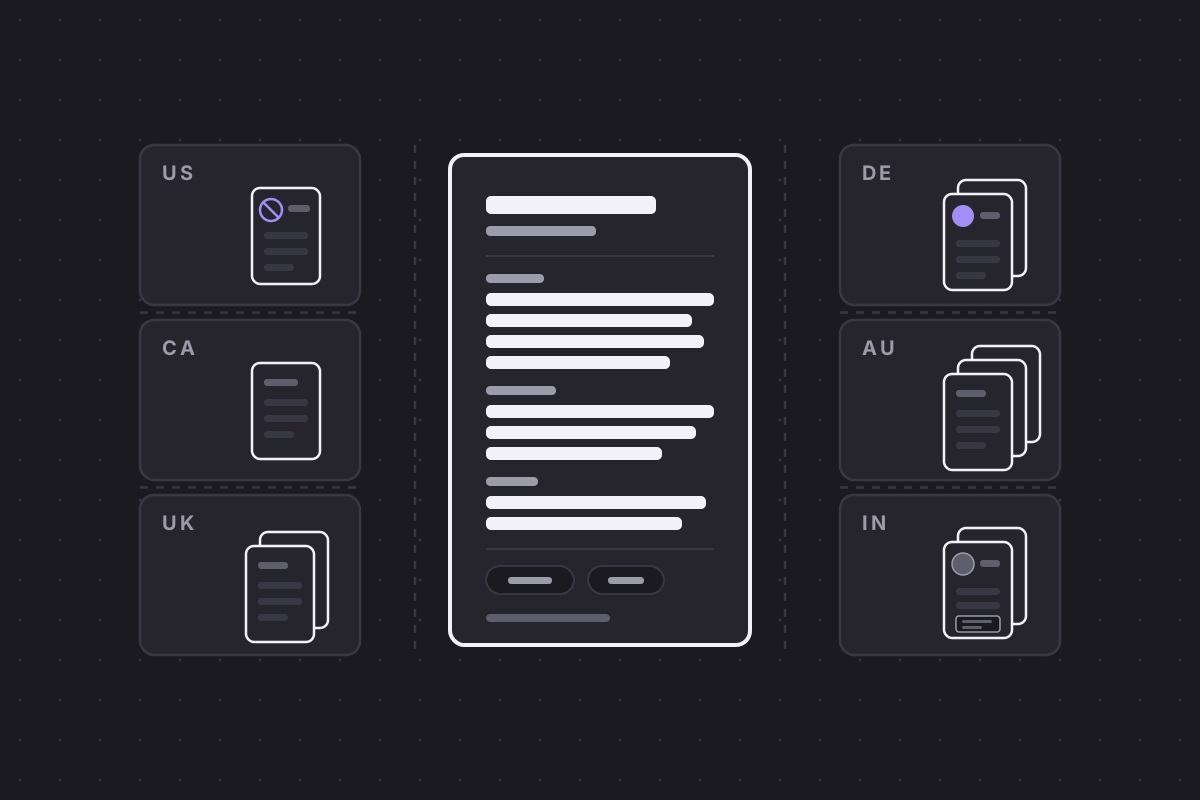
This piece maps the rules that change at the border across six markets: the United States, Canada, the United Kingdom, Germany, Australia and India. Photos, length, personal details, even what the document is called. There is no single international resume format, only local rulebooks, and almost all of them are invisible until you apply across a border and hear nothing back.
The rules you learned are regional
Most people learn resume rules once, early, from whoever happened to be nearby: a university careers service, a parent, a forum. Those rules then harden into universal truths. They are not universal. They are local conventions shaped by each country's employment law, hiring culture and history, and they contradict each other on almost every point.
The contradictions are not trivia. A photo is standard practice in one market and grounds for automatic rejection in another. A personal details section reads as complete in Mumbai and alarming in New York. The two-page CV that signals seniority in London signals verbosity in San Francisco. Same candidate, same career, opposite outcomes, purely on formatting culture.
One thing does hold everywhere: parsers. Applicant tracking systems in every market share the same mechanical limits, so the advice about layouts that scramble your data applies from Bangalore to Boston. The machines are more internationally consistent than the humans.
Photos: expected in one market, disqualifying in another
In the United States and Canada, a resume photo is close to disqualifying. Anti-discrimination rules mean a photo exposes the employer to claims of biased screening, so many recruiters discard photographed resumes on sight rather than carry that risk. The same logic covers date of birth and marital status. This is not squeamishness; it is legal self-defence, and it works against the candidate who includes them.
Germany and much of continental Europe sit at the other pole. The Bewerbungsfoto, a professional application photo, was for decades a fixed part of the German application folder, and while the norm is fading, it has not gone. Many German candidates still attach one, and many hiring managers still expect it, particularly outside tech.
The United Kingdom follows the no-photo convention, closer to North America than to its neighbours across the Channel. Australia is the same. India sits in between: a photo is not required, but it remains common and raises few eyebrows.
Should a resume be one page: length norms by country
Length is where the loudest rule, the American single page, does the most damage abroad. The one-page convention is real in the US and Canada for early-career candidates, with two pages acceptable as experience grows. Export it elsewhere and it starts costing you.
CV length in the UK standardises at two pages, and a one-page CV from a mid-career candidate can read as thin. Australia runs longer still, with two to three pages common and fuller role descriptions expected. India is flexible: completeness matters more than page count, and a personal details section still occupies space that other markets abandoned years ago.
- United States: no photo, and one is often treated as disqualifying; 1 page early career, 2 with seniority; no personal details, so no date of birth and no marital status; the document is called a resume.
- Canada: no photo; 1 to 2 pages; no personal details; called a resume.
- United Kingdom: no photo; 2 pages standard; minimal personal details; called a CV.
- Germany: a photo was historically expected and is fading but not gone; 1 to 2 pages plus attachments; personal details more accepted but shrinking; called a CV or Lebenslauf.
- Australia: no photo; 2 to 3 pages; minimal personal details; resume and CV are used interchangeably.
- India: photo optional and still common; length flexible, often 2 pages; a personal details section is still common; CV and resume are used interchangeably.
Treat the table as the norm, not the law. A senior American engineer with fifteen years of work is not compressing it onto one page, and a British graduate should not pad to two. Length follows substance; the table tells you what the local reader is calibrated to expect when they pick your document up.
Personal details: what India includes and the US strips out
An Indian CV commonly carries a personal details block: date of birth, nationality, languages, sometimes marital status. In its home market this reads as completeness. Sent to a US or Canadian employer, the identical block reads as a liability the recruiter now has to handle, for the anti-discrimination reasons above, and the safest handling is often the bin.
The translation rule is usefully asymmetric. Stripping personal details rarely hurts you in India; including them can sink you in North America. When in doubt, strip. The exception is information a market genuinely requires, such as work-authorisation status where employers are obliged to ask, and that belongs in the application form when the form offers a field, not on the resume.
CV or resume: why the word itself matters
The vocabulary is a map of the rulebooks. In the United States, a CV and a resume are different documents. The resume is the short marketing document described in this article. The CV is the long academic record, running to many pages of publications, grants and teaching, used mainly in academia, medicine and research.
In the UK, India and Australia, CV and resume describe the same document, and the local conventions above apply whichever word the advert used. So in the CV vs resume question, the word itself is the signal. An American posting asking for a CV is probably academic. A British posting asking for a CV wants two tidy pages. Read the word and you know which rulebook you are inside.
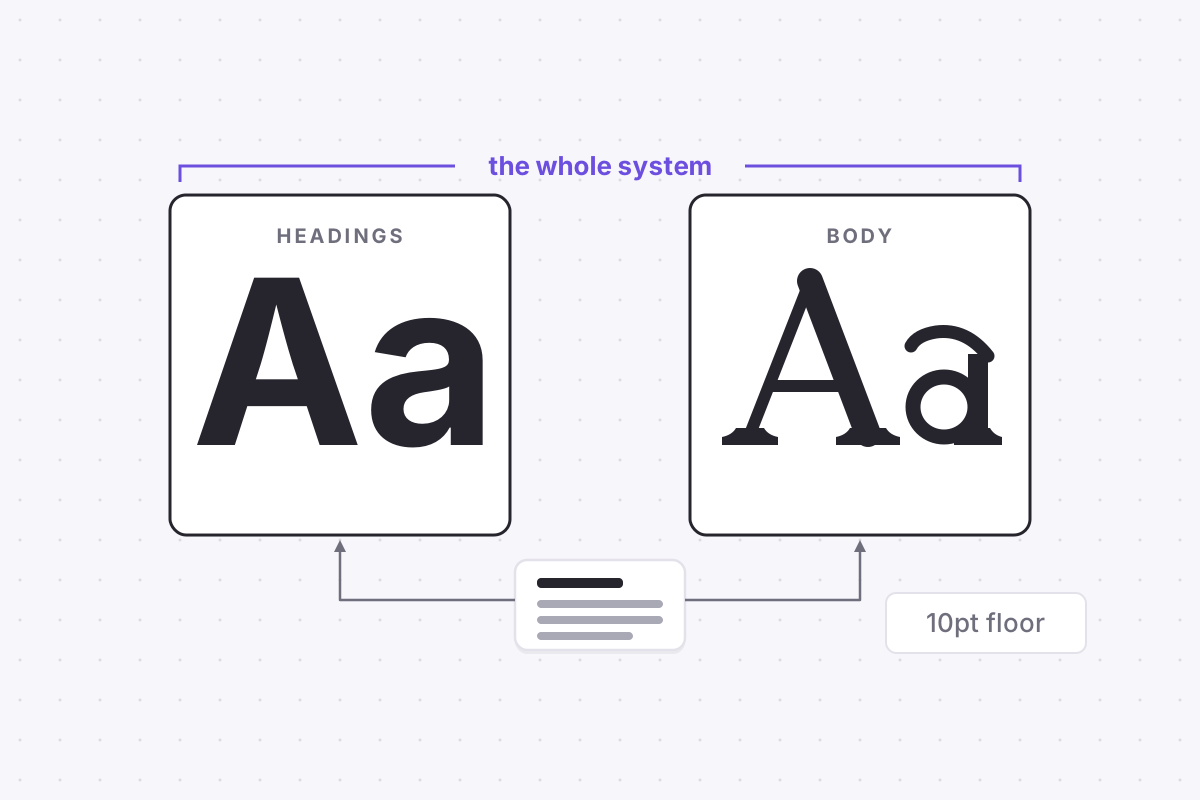
Whatever the market calls the document, the typography rules do not move. The two-font system renders and parses identically in all six markets, which makes it one of the few things you never need to localise.
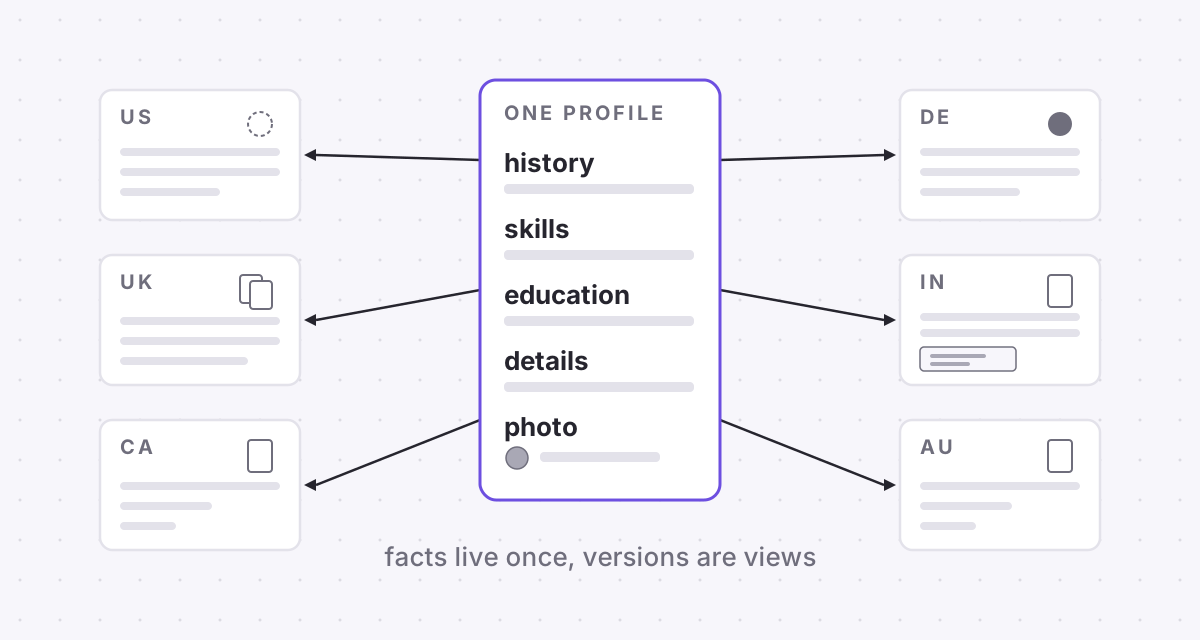
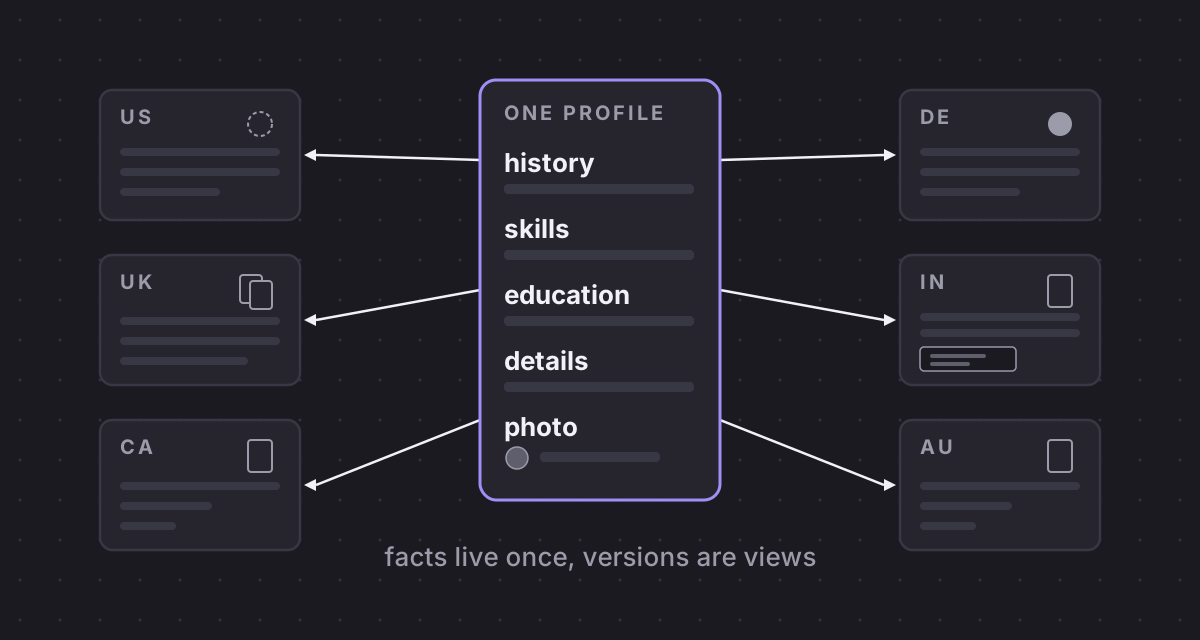
One profile, six versions
The tempting solution is six files, one per market, and it fails slowly. The files diverge. A new job gets added to three of them, a corrected date survives in two, and within a year you no longer know which version is true.
The structure that holds is one canonical profile and generated, market-specific versions. Your work history, skills and achievements live once, in one place, and each market's document draws from it: photo on for Germany, off for Toronto, two pages for London, personal details for Mumbai. This is the model ApplyHustle's Resume Studio is built around, one profile powering every version, but the principle stands whatever tool you use, including a folder of strictly disciplined copies.
The same border logic extends past the resume. Cover letter culture varies just as sharply by country and industry, and whether anyone reads them at all depends on where you are applying. Learn the local rulebook before you polish the document; it is the cheapest competitive advantage in an international search.