Fresher resume format in India: what screening filters on
What campus and off-campus screening actually filter on, why a Naukri score is not a parse check, and what fills each section.
A fresher resume in India passes through two different screens, and neither works the way the advice assumes. On campus, the placement cell's portal filters on data you typed into a form months earlier. Off campus, an applicant tracking system converts your PDF into a database record and a recruiter searches the record, not the document. Most fresher resume advice is written as if a human reads page one first. By the time a human reads anything, both machines have already voted.
Start with campus, because its filter is the bluntest. When a company visits your college, the shortlist is usually cut before any resume is opened: CGPA cutoff, backlog count, branch eligibility, sometimes tenth and twelfth percentages. Those numbers come from the placement portal's form, not from your resume. If your CGPA clears the bar, you are in the room; if it does not, the best-written resume in the batch never gets opened. The resume's job on campus is the round after the cutoff, when an interviewer skims it for projects to ask you about.
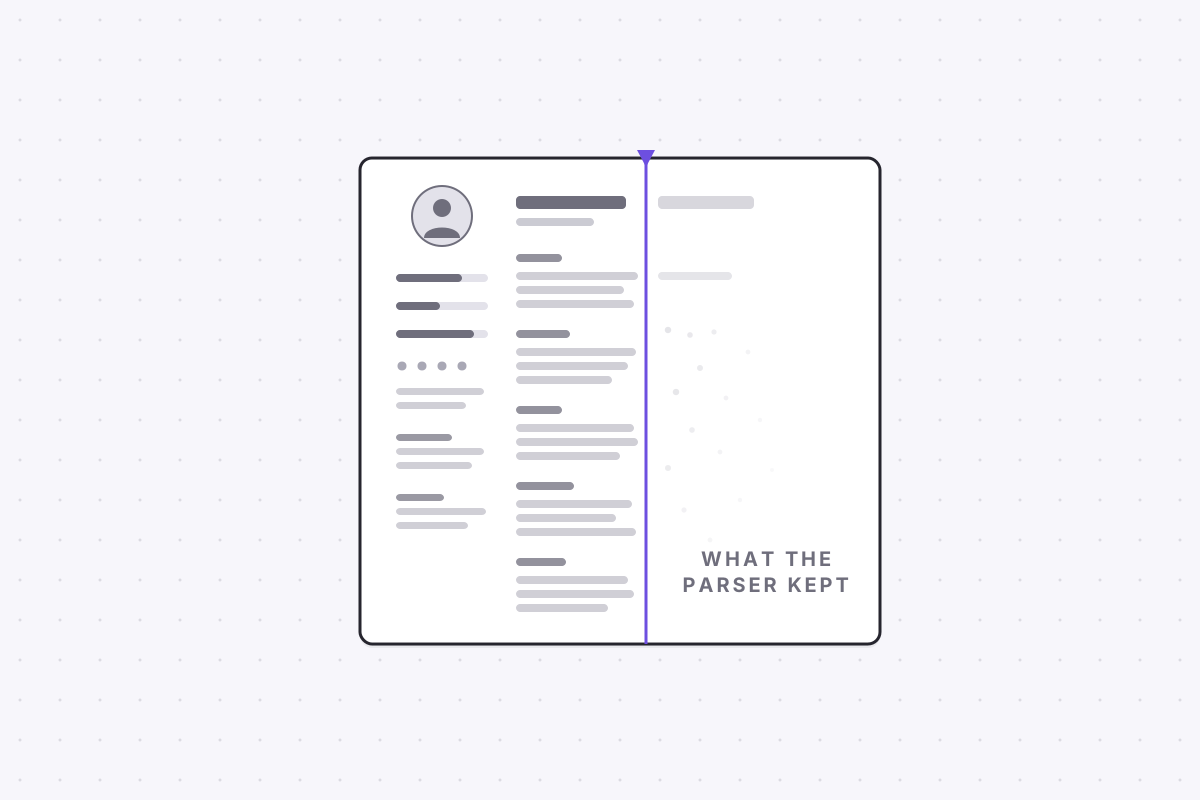
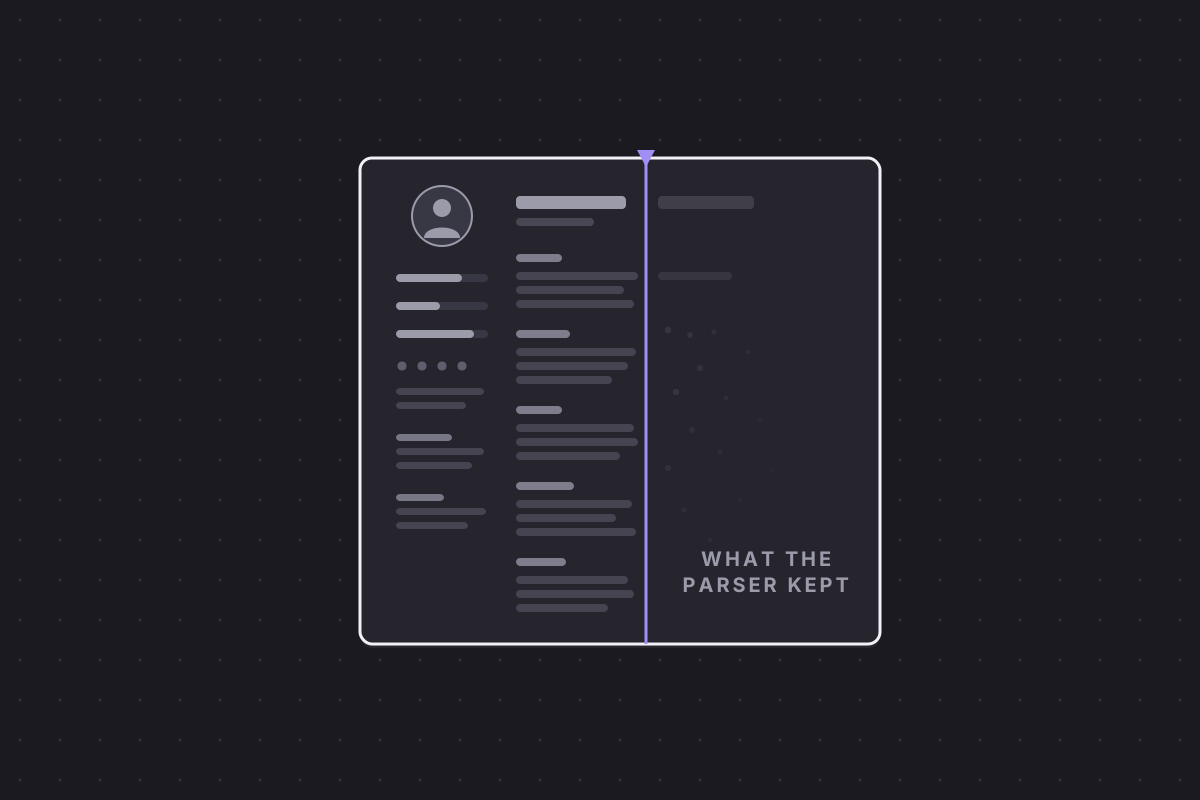
Off campus, the mechanics change but the principle holds: a machine reads structure, not effort. The portal or the company's ATS parses your file into fields — name, education, skills, dates — and recruiters filter and search on those fields. The failure mode is not rejection but absence. A skills list trapped inside a graphic, or a two-column layout that interleaves when extracted, parses into an empty field, and an empty field matches no search. Nobody decides against you. The record simply never qualifies.
What a Naukri resume score actually measures
Every Indian fresher meets a resume score early, usually Naukri's. Upload your resume, fill in your profile, and the site hands you a percentage that climbs as you add a photo, list your skills and complete your education details. It is natural to read that number as a verdict on your resume. It is not. Naukri does not publish its formula, but the inputs it prompts you for tell you what it is grading: profile completeness. The score measures how much of Naukri's form you have filled in.
That is still worth doing — a fuller, fresher profile genuinely matches more recruiter searches, and recruiter search is how a great deal of portal hiring actually starts. But a completeness percentage says nothing about whether your PDF parses. You can hold a 95 percent profile score while the file attached to it scrambles in every employer ATS it meets, because the profile and the document are graded by different machines on different things.
So check the document separately. The one-minute version: open your resume, select all, copy, and paste into a plain text editor. What appears is close to what a parser's extraction step sees, and the symptoms read directly — scrambled order means columns are interleaving, missing chunks lived in graphics or text boxes. The fuller version is to run the file through a parser of the same class employers use and read the record it produces. ApplyHustle's ATS score checker is free and does exactly that, grading the file on parsing rules rather than form completeness, which is the distinction the resume-score sites blur.
The sections that carry a fresher resume
The standard fresher panic is the empty experience section. Drop the section name and the panic goes with it: you do not have jobs to list, you have evidence to organise, and for a fresher the evidence lives in projects. A project entry earns its place when it reads like work — what the thing does, what you built, which tools you used, and one honest outcome. 'Deployed for the department fest, handled 400 registrations' beats 'implemented using MERN stack' every time. Two or three projects written this way outweigh eight one-liners.
Education carries more weight on a fresher resume than it ever will again, so give it real fields: institute, degree and branch, years, CGPA. Include the CGPA — more on that below. Tenth and twelfth percentages still get asked for in India; give them one compact line rather than a table that eats a third of the page.
Internships and training belong in their own section even when they were short. A six-week internship written like a job — what you did, for whom, with what — signals more than a semester of coursework, because it is the only line on the page where someone else depended on your work. College positions of responsibility earn a line only when they involved something measurable: an event you ran, a budget, a team.
Skills are the section recruiter search actually touches, and the section freshers inflate most. List only what you can defend in an interview, name technologies precisely — 'React' and 'PostgreSQL', not 'web development' — and keep the list in plain text so a keyword search can match it. Five real skills that each connect to a project on the same page beat twenty orphans.
- Header: name, phone, email, city, and a LinkedIn or GitHub URL — placed in the body of the page, not the document header, which some parsers skip.
- Education: institute, degree and branch, years, CGPA; tenth and twelfth as one compact line.
- Projects: two or three, each with what it does, what you built, the stack, and an outcome.
- Internships and training: written like jobs, however short they were.
- Skills: specific, honest, in plain text; nothing you cannot defend in an interview.
- Optional last: certifications and achievements a stranger could verify.
What earns no space: a paragraph-long career objective (one specific line or nothing), a hobbies section listing music and cricket, and soft-skill inventories no search will ever run against. Every line you cut from these is a line of project evidence the reader now reaches sooner.
Where Indian convention differs from US advice
The photo question first, because imported advice gets it backwards for the Indian market. In India a photo is optional, still common, and raises few eyebrows; leaving it off costs you nothing, and including it costs you nothing at home. The moment you apply to the US or Canada it becomes a liability, because many recruiters there discard photographed resumes rather than carry discrimination risk, and the UK follows the no-photo convention. The practical rule for a fresher: no photo by default, and the question never needs thinking about again.
The one-page rule is right for a fresher, and right for the wrong reason. American advice frames it as a law of resumes; it is actually a US convention for early-career candidates, and India is flexible about length. But a fresher rarely has more than a page of real material, and the padding that fills page two — expanded hobbies, a coursework table, a skills matrix — is exactly the content that dilutes what page one is saying. One page, because that is what your evidence honestly fills.
CGPA is where US advice damages Indian freshers most. American guidance says drop your GPA once you have any experience, and often before. In India, CGPA is a hard filter: campus placements cut on it before a resume is opened, and off-campus fresher postings routinely state a minimum. Omitting it does not make the filter go away; it makes a recruiter assume the number is bad, or a portal treat the application as incomplete. Put it in the education line, plainly, and let it be what it is.
The personal-details block — date of birth, father's name, marital status — and the closing declaration line are Indian conventions that survive on habit. At home they are harmless, but they spend space your projects need, and sent abroad the same block reads as a liability the recruiter has to handle. Keep personal details to what a form cannot collect elsewhere, which is usually nothing, and let the declaration go: no screening system, human or machine, has ever filtered on it.
What to do this week
Rebuild the document top-down in one sitting. Single column, standard headings — Education, Projects, Internships, Skills — contact details in the body of the first page, one date format everywhere. Write your two best projects like work and attach an outcome to each. Then apply the interview test to every remaining line: if you could not speak about it for two minutes, it comes off the page.
Then test the two things separately, because they are separate. Keep the Naukri profile complete, since recruiter search reaches complete profiles. Parse-check the PDF, since employers read the record it becomes. Neither check takes an hour, and between them they cover both machines that vote before any human does. The interview is still yours to win — the resume's whole job is to stop you losing before it starts.