Apply to 10 roles well, not 100 badly
Spray-and-pray feels productive and converts terribly. The arithmetic on tailored applications, and where automation genuinely helps.

Mass applying has a rhythm that feels like progress. Open the portal, attach the resume, hit submit, repeat. By Friday the counter says 100 and the week feels earned. The trouble is that the counter measures activity, and hiring does not pay out on activity. It pays out on interviews.
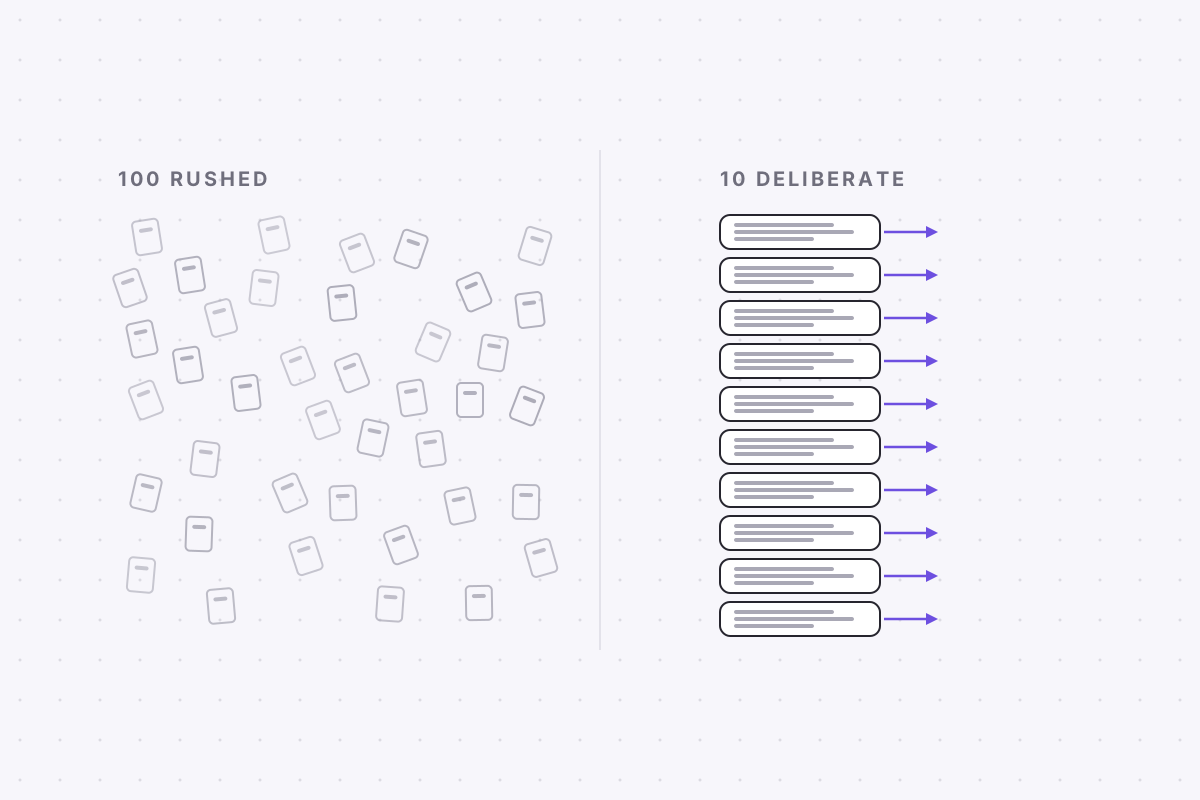
Put plainly, "how many jobs should I apply to" has an unfashionable answer: fewer than you think, prepared far better than the volume habit allows. For most active searches that means 10 to 20 tailored applications a week, each one tracked, instead of 100 rushed ones that vanish without reply.
Why 100 applications a week feels like progress
Volume is comforting because every submission delivers a small, immediate sense of completion. You did something. The application exists. On a hard week that feeling is worth a lot, and the one-click apply buttons on every major portal are engineered to keep supplying it.
The arithmetic on the other side of the button is less comforting. Popular corporate postings attract applicants in the hundreds; a widely cited Glassdoor figure puts the average around 250 per opening, and well-known employers clear that number easily. An untailored resume enters that pile as one of the indistinguishable many, and sending the same resume to 100 piles does not improve its position in any of them. You are not compounding effort. You are repeating the same low-probability event and calling the repetition a strategy.
There is a hidden cost too. The hours spent feeding portals are hours not spent on the handful of applications that had a real chance, and the silence that follows 100 low-effort attempts does genuine damage to morale. High volume produces high silence, and high silence is what makes a search feel hopeless.
The conversion problem nobody tracks
Ask someone how many applications they have sent and they will know. Ask their response rate and almost nobody can answer, because almost nobody logs outcomes. That gap is the whole problem. Send count is the vanity metric of a job search. Response rate is the honest one, and it is invisible without records.
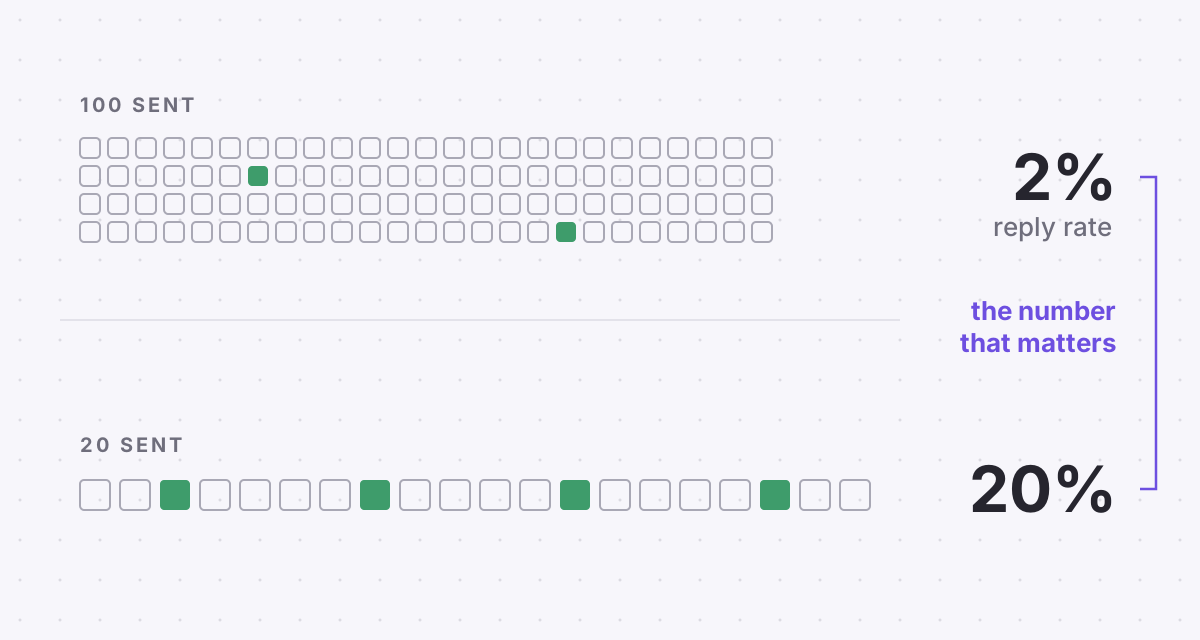
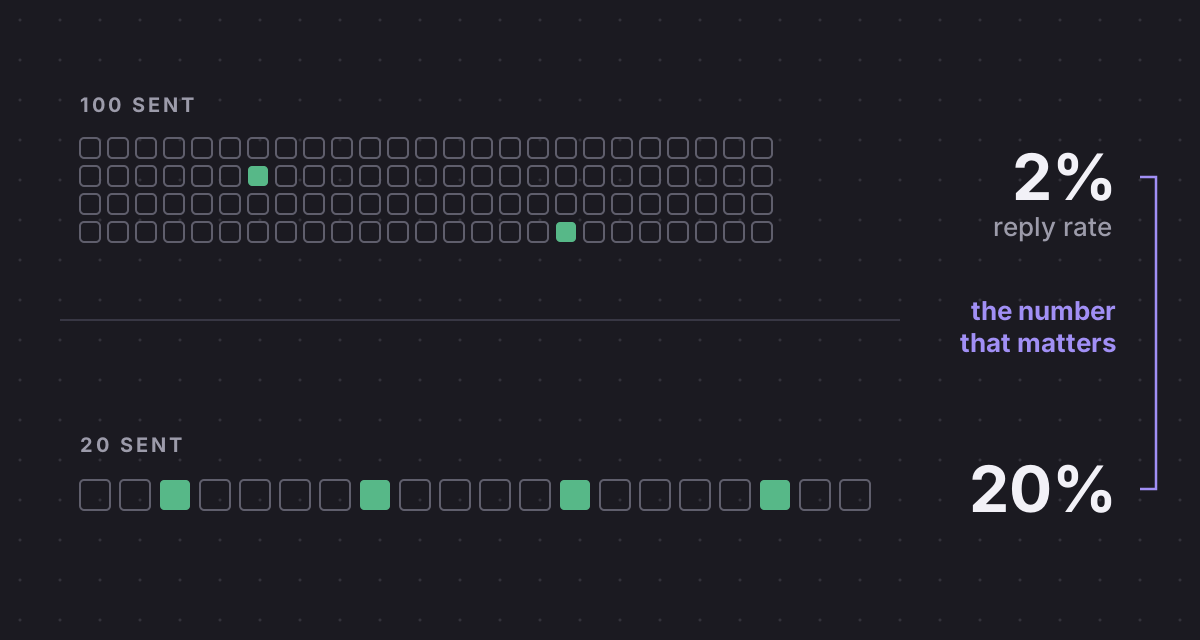
Run the numbers on a typical volume search: 100 applications, two recruiter replies, a 2 per cent response rate. A tailored search that sends 20 and draws four replies is running at 20 per cent, a tenfold difference in the number that matters, while looking five times lazier on the number that does not. Twenty well-prepared applications beat 100 rushed ones, but only measurement will convince you of it, because volume feels productive and tailoring does not.
That is the real case for logging every application somewhere, whether in a spreadsheet or in ApplyHustle's Application Tracker. The point is not tidiness. The point is seeing your own conversion rate and letting it steer your behaviour.
How many jobs should I apply to? The case for 10 to 20 tailored ones
The 10-to-20 range is not a magic number. It is what falls out of an honest time budget. Suppose the search gets ten hours a week. Spread across 100 applications, that is six minutes each, enough to attach a file and nothing else. Spread across 15, it is 40 minutes each, enough to read the posting properly, adjust the resume to it, and write 150 words of cover letter where one is accepted.
Choosing which 10 to 20 also does quiet work on quality. Selection forces you to read postings closely, and reading closely surfaces both the roles you would actually accept and the requirements you actually meet. Fit improves before you have changed a single line of the resume. And the filter itself no longer has to run on instinct: the decision to apply at all now comes with a number, because a match score against the posting tells you whether a role deserves one of your twenty slots before you spend 40 minutes on it.
Tailoring that takes minutes, not hours
The word tailoring scares people because it sounds like rewriting. It is not rewriting. Tailoring is mechanical, and the mechanism is vocabulary. Recruiters retrieve candidates by searching for the exact terms their posting uses, which means a resume gets searched before it gets read, and a synonym is a miss. If the posting says "stakeholder management" and your resume says "client coordination", you may be describing the same decade of work and still never appear in the result set.
A workable tailoring pass takes 15 to 20 minutes. Mirror the posting's job title in your headline where honesty allows. Pull the five or six skills the posting repeats into your skills section using the posting's own words. Rewrite your two most relevant bullets so the vocabulary matches the advertisement rather than your old job description. Then check coverage: which of the posting's terms still appear nowhere in your document. That is the entire exercise, and it moves you from the invisible majority into the searched-for minority.
Where automation actually helps, and where it wrecks you
Automation has a clean dividing line in a job search. It belongs in the low-judgement steps and nowhere near the high-judgement ones.
- Logging applications, dates and stages is clerical work a tracker should do for you, because memory fails at exactly the moment the pipeline gets busy.
- Scoring your fit against a posting before you invest time is pattern-matching that a tool such as an AI Match Score does faster and more consistently than you can.
- Checking keyword coverage between your resume and a posting is mechanical comparison, and automating it frees your minutes for the judgement calls that remain.
The wrecking version of automation is the mirror image: one generic resume fired at every opening by a bot. That does not automate applying. It automates arriving at the bottom of 250-deep piles, and it does so at a scale that can burn through every relevant opening in your market within a fortnight. The tool took over the high-judgement work along with the low, and the high-judgement work is where interviews come from.
Running your search as a funnel
The mental shift that makes all of this stick is treating the search as a funnel with four stages: applied, response, interview, offer. Every sales team on earth manages a pipeline this way, and a job search is a pipeline in which the product is you.
A funnel view answers questions volume never can. Which version of your resume converts to responses. Which sources produce interviews rather than silence. Where applications stall, and when a stalled one has earned a nudge, because a measured follow-up is a normal stage of the process rather than an imposition. An Application Tracker gives you the stages for free; the discipline of moving each application through them is yours.
So apply to 10, or 15, or 20 roles a week, and apply to them well. Read the posting, mirror its language, log the outcome, and let your own response rate tell you what is working. The counter that said 100 was never measuring your search. It was measuring your anxiety, and the week has better uses for that time.