Nobody reads cover letters. Except when they do.
Most cover letters go unread, and a few decide everything. When a letter moves the needle in six markets, and the 150-word structure.


Ask ten recruiters whether they open cover letters and the room splits. Several will say they never read them. One or two will say a good letter swung an interview decision within the past month. Both camps are telling the truth, which is why "do cover letters matter" has outlived a decade of arguments without producing a settled answer.
The honest answer is probabilistic. A large share of your letters will never be opened. A meaningful minority of readers will study them closely and weight them heavily. You cannot know in advance which reader you will get. So the real question is not whether cover letters matter in the abstract. It is whether 150 well-chosen words are a sensible hedge against a reader you cannot predict. Usually they are.
Do cover letters matter? Most go unread
Recruiter surveys on this point split with unusual consistency. Year after year, sample after sample, a large group reports never opening the letter while a smaller group reports reading it and letting it shape the shortlist. No survey has produced a clean majority for either camp, and anyone quoting a single percentage at you has picked the survey that suits their argument.
That split changes the economics of the decision. If nobody read letters, you could skip them with a clear conscience. If everybody read them, you would treat the letter as a second resume. The actual situation, a weighted coin toss, argues for a short letter whenever the role justifies five minutes of work.
The asymmetry does the rest. A tight letter costs minutes to write. Meeting the one reader who weights letters, without one, can cost you the interview. Small stake, occasional large payoff. The trade only breaks down when each letter takes an hour, and that is a length problem, not a letter problem. Most letters are three paragraphs too long before they are anything else.
The exceptions: when a letter decides the interview
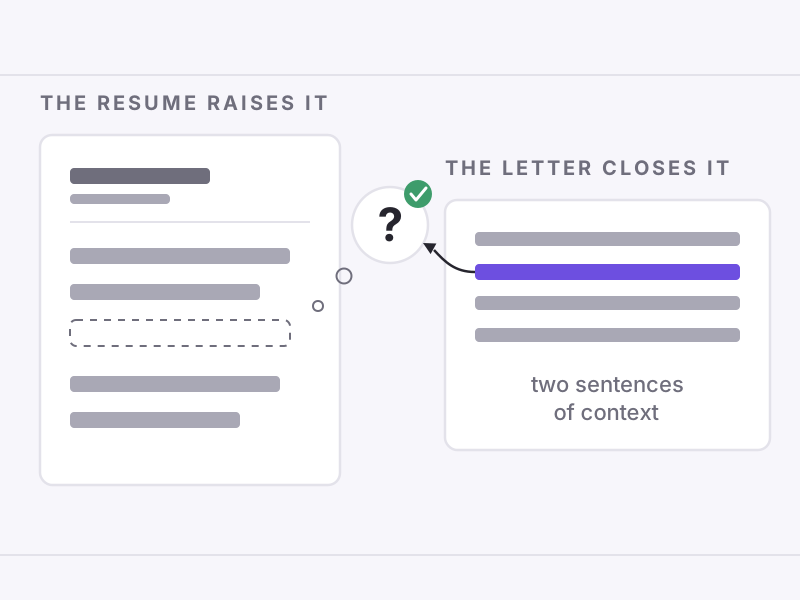
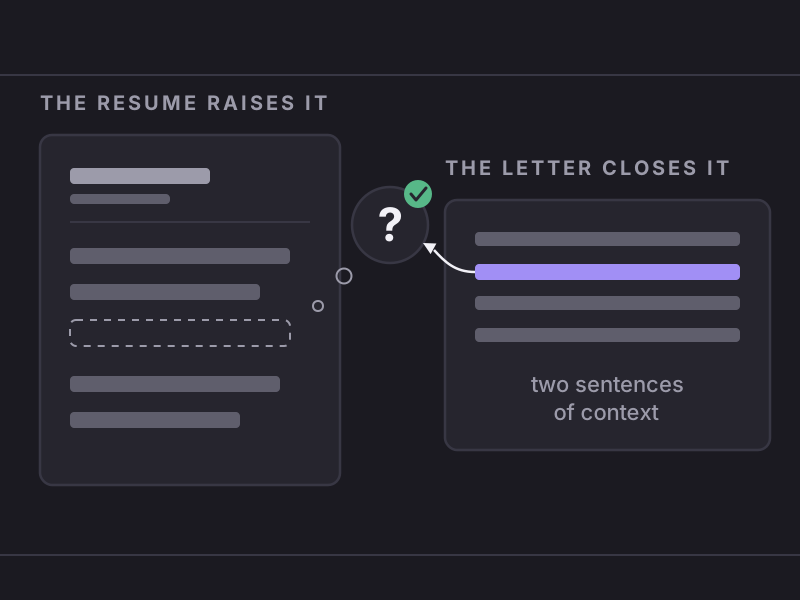
A cover letter earns its keep in one situation: the resume cannot explain something the reader needs to know. Four cases come up again and again.
- A career change, where your last three job titles point somewhere other than this role and the reader needs one sentence on why the move makes sense.
- A relocation, where a foreign address invites the silent question of whether you are actually available, and a line confirming your move date answers it.
- An employment gap, where two unexplained years read as risk and two sentences of context read as a decision already made.
- A genuinely specific reason for wanting this company, the kind that names a product, a market or a piece of their work, and could not be pasted into any other letter.
In each case the resume raises a question, and an unanswered question is the easiest reason to reject a candidate. The letter exists to close that question before it is asked. If none of the four applies to you, the letter is a formality; if one of them does, it may be the most important document in the application.
Six markets, six norms
Expectations do not travel. What reads as diligence in Hamburg reads as padding in Bangalore, so calibrate to the market you are applying into, not the one you came from.
- United Kingdom: a covering letter remains close to expected, especially for professional roles. Skipping it gets noticed.
- Germany: the formal Anschreiben tradition holds, and a structured, page-length letter is still standard with many employers.
- United States: optional but noticed. Few postings require one, yet a sharp letter gets read when a shortlist is close.
- Canada: similar to the US in form, with letters carrying more weight in the public sector and formal industries.
- India: high-volume portals rarely surface a letter at all. Effort converts better in the resume and the referral.
- Australia: a brief tailored letter is commonly expected, and public sector applications often add structured selection criteria on top.
The border effect is not unique to letters. Resume conventions on length, photos and personal details shift just as sharply, and it is worth knowing which resume rules change at the border before you apply abroad.
The 150-word structure
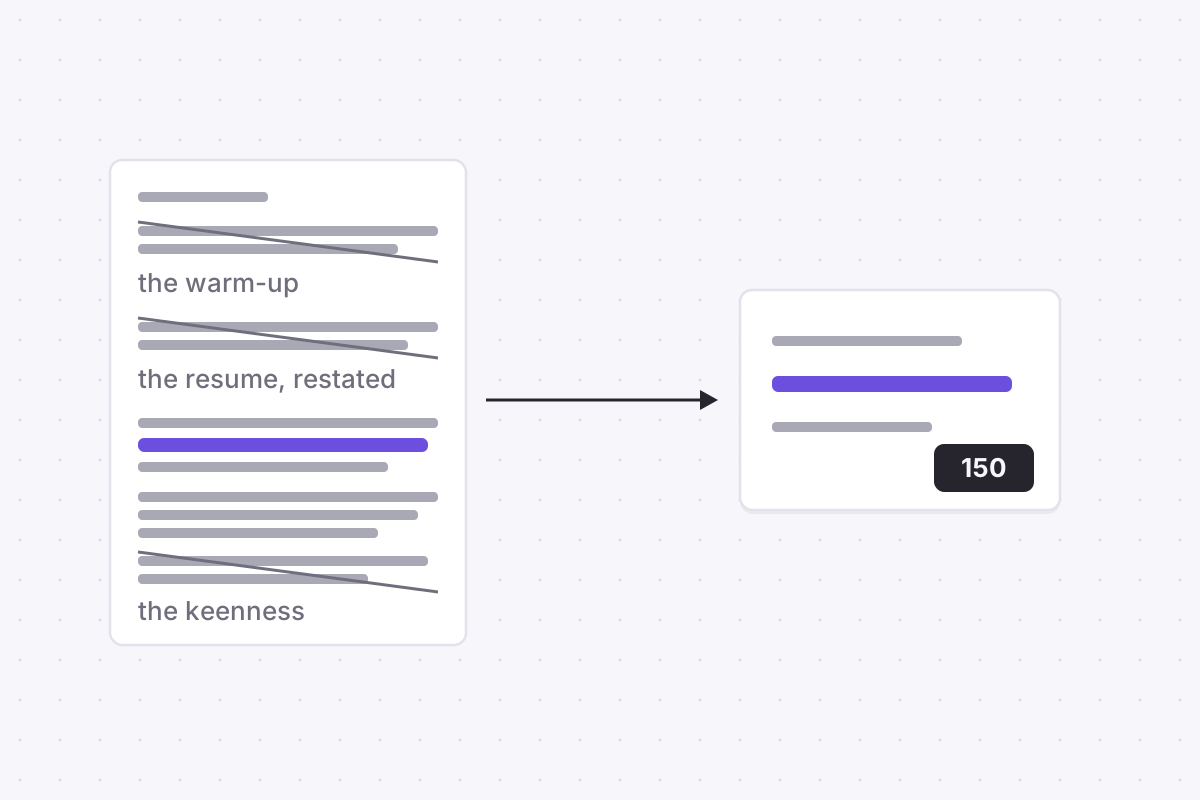
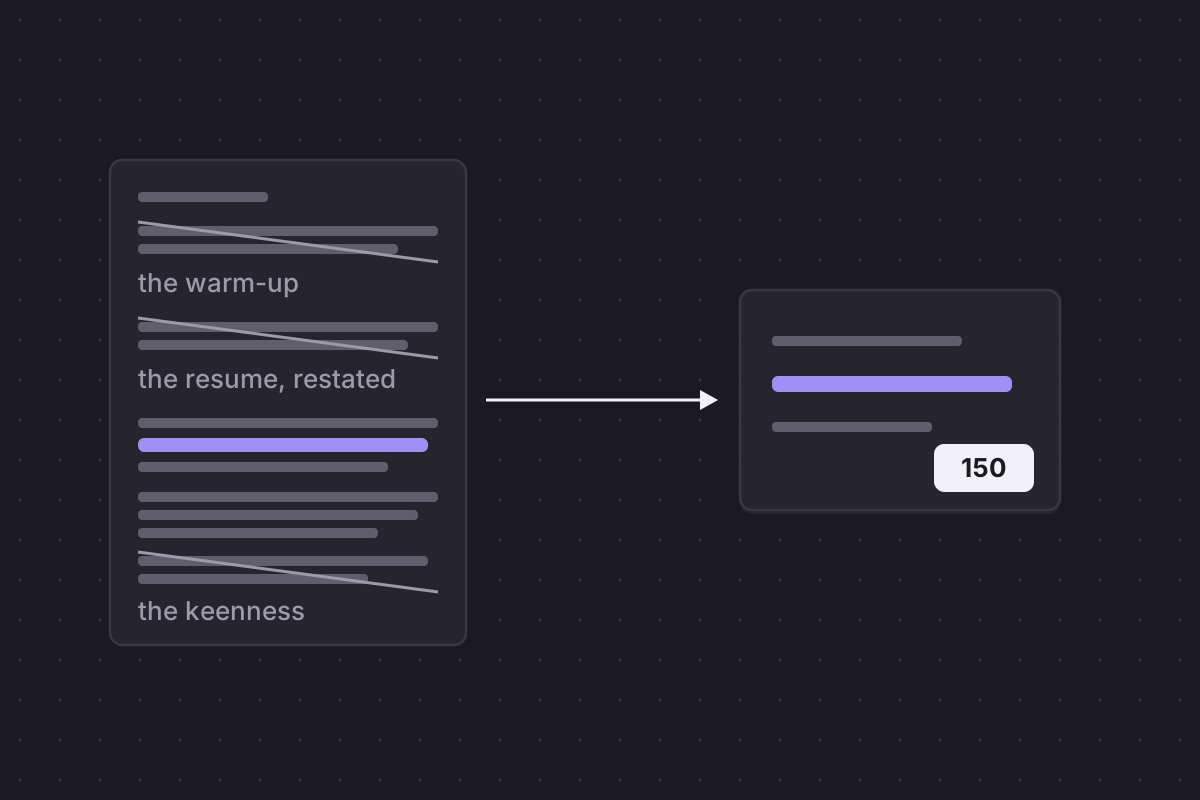
When a letter is worth writing, it is worth writing short. The structure that survives a skim has three parts and roughly 150 words.
One line of why-this-company. Name something specific and checkable: a product you use, a market they entered, a problem their postings keep mentioning. This line proves the letter was written for them and not pasted from the last application.
One proof paragraph anchored to a number. A single project, told with the scale, the tool and the outcome. This paragraph is the whole case; everything around it is framing.
One line of ask. What you want to happen next, stated plainly. Usually that is a conversation.
This is also the shape ApplyHustle's Cover Letter Studio drafts to, pulling the proof point from the same profile that feeds your resume, so the tailoring takes minutes rather than an evening.
When to skip it entirely
Skip the letter when there is nowhere for it to live. If a portal has no field for it, or a posting says resume only, sending one anyway helps nobody. On India's high-volume portals especially, a letter often never reaches a human screen, and the time belongs elsewhere.
Be careful with the word optional, though. An optional cover letter field is a filter in disguise. Most applicants read "optional" literally and leave it empty, so a tailored 150 words in that box separates you from the bulk of the pile at almost no cost.
So, do cover letters matter? Not universally, and not as the three-paragraph essay most people still write. They matter as a cheap hedge: a few minutes of specific, numbered text for the reader who might weight it, skipped cleanly where no reader exists. Write for the coin toss, not for the myth on either side of it.