Your cover letter is three paragraphs too long
The short letter isn't lazy, it's read. What to cut first, the one proof paragraph that matters, and where a full page is still the custom.
Most arguments about cover letters are arguments about content. The quieter problem is length. Conventional guidance says 250 to 400 words, and most letters land at the top of that range because writers equate length with effort. Readers do not. They equate length with cost, and they respond by skimming.
So how long should a cover letter be? Short enough to work in a skim. In practice that means staying under 250 words and building the letter around one concrete proof point, because a letter that gets eight seconds of attention has to succeed in eight seconds.
How letters actually get read: a skim, not a study
Picture the reading conditions. A recruiter is moving through a pile, resume first, and the letter gets whatever attention is left over. Recruiter surveys consistently show that many never open the letter at all, and the ones who do are not settling in for a careful read. They scan the opening lines, jump to anything that looks like evidence, and stop the moment the value runs out.
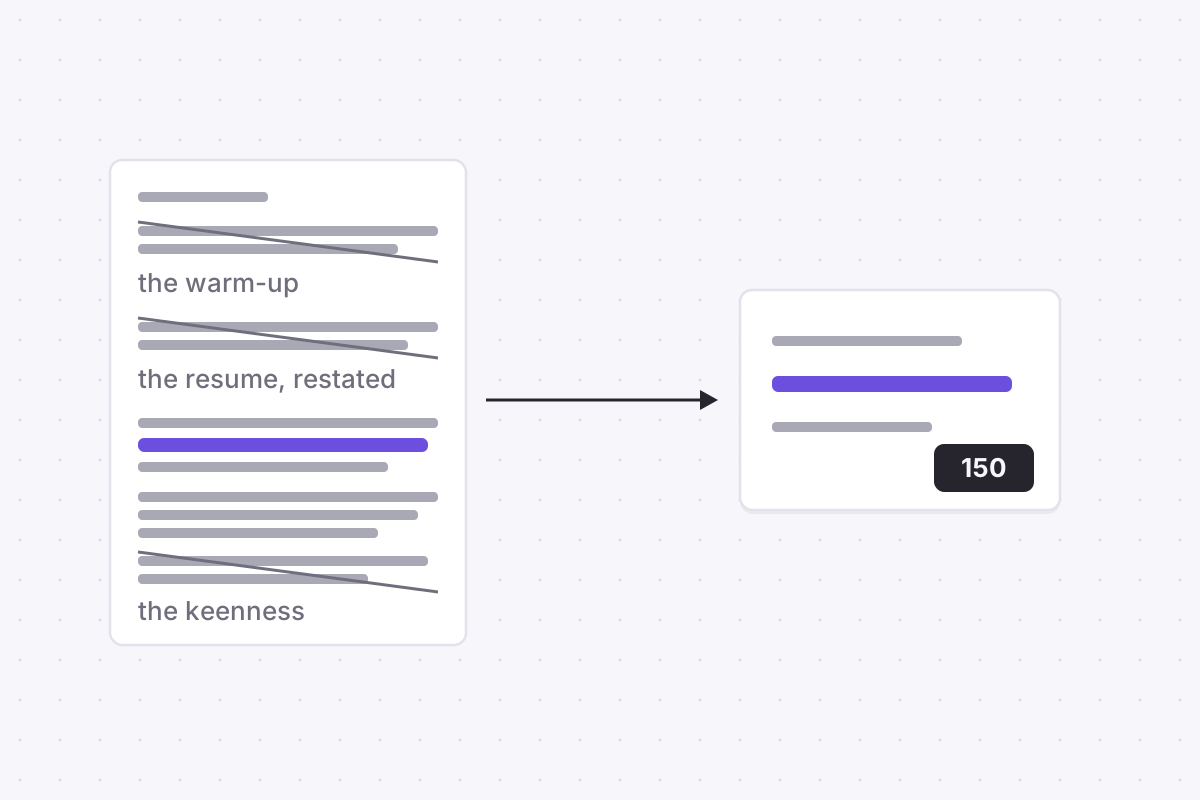
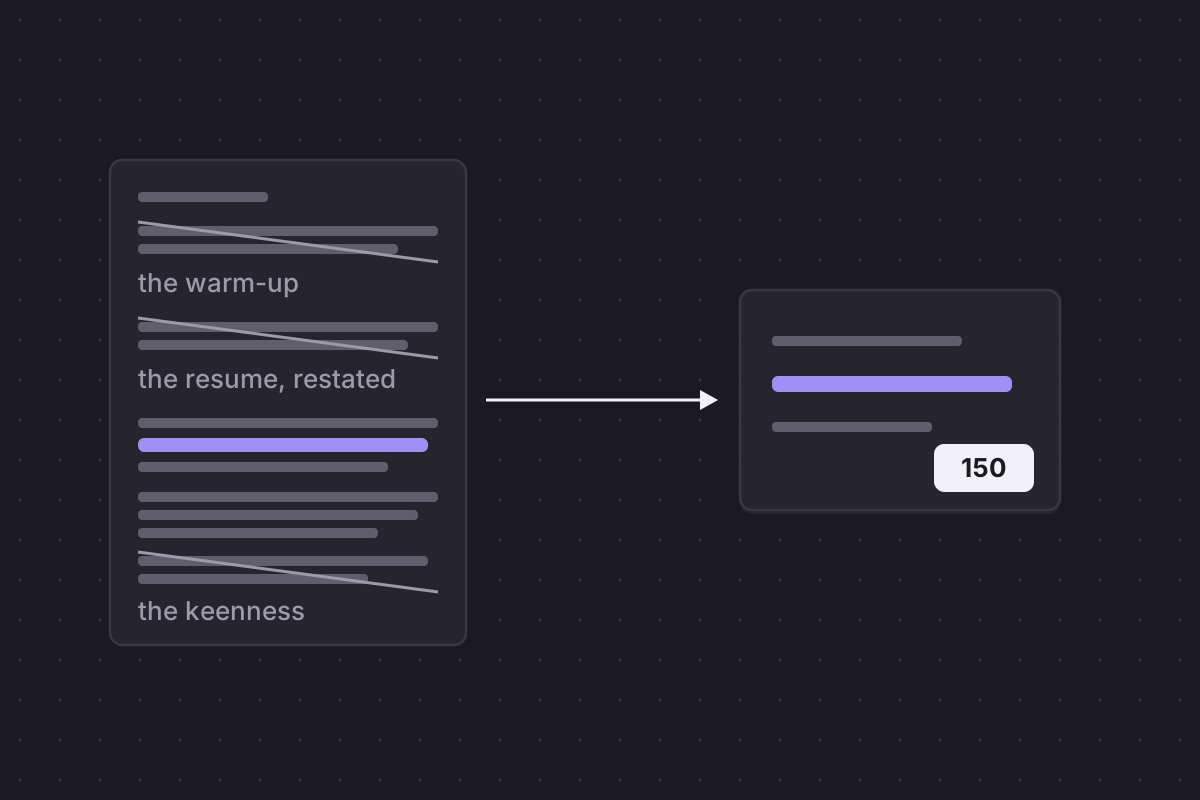
A skimming reader processes openings, numbers and names. Adjectives, transitions and declarations of enthusiasm are precisely the material a skim discards. Once you accept that, most of the classic letter, the warm-up, the restated resume, the closing paragraph of keenness, is revealed as text nobody will ever process.
This is not a counsel of despair. It is a design brief. A letter built for skimming puts its one strong fact where a moving eye cannot miss it, and it stops before the eye moves on.
How long should a cover letter be? 250 words is a ceiling, not a target
The old 250-to-400 range dates from an era when the letter was a physical page and brevity looked lazy. Under skim conditions the logic inverts. A letter under 250 words with one concrete proof point outperforms the same letter padded to a page, because padding does not add information. It dilutes the information already there.
Treat the word count as a budget with a hard ceiling. Every sentence you keep takes attention from another sentence. At 400 words, your one good number sits surrounded by 350 words of upholstery. At 150, it stands in the open where a skim cannot miss it. Length is a decision about where the reader's eight seconds land.
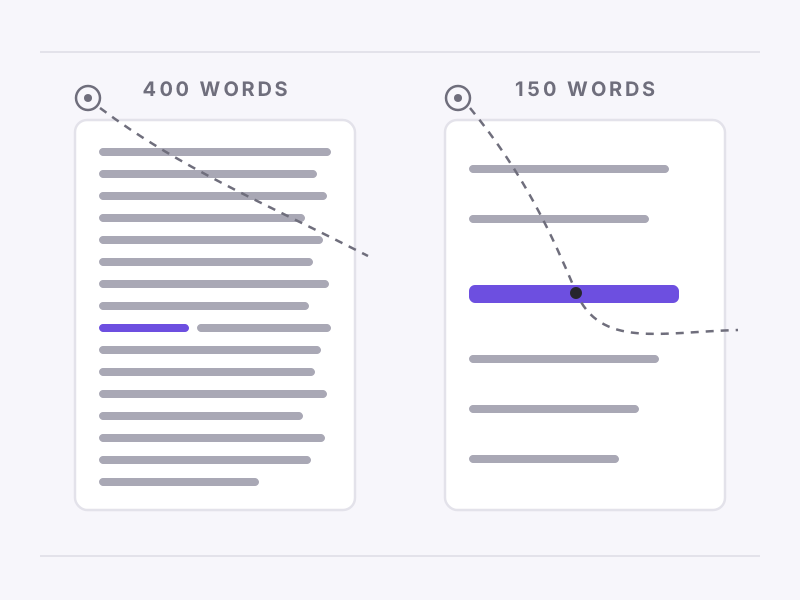
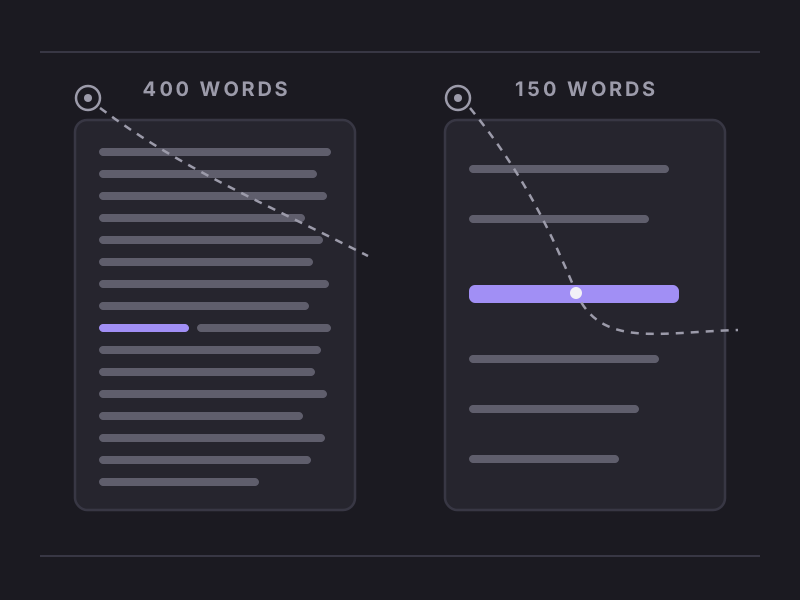
There is a simple test for whether a letter is over budget. Read it aloud in 60 seconds. Whatever you had to rush past is what a skimming reader will never see, and it is usually the material you were proudest of writing.
Cut the throat-clearing paragraph first
Nearly every long letter opens the same way: "I am writing to apply for the position of Marketing Manager as advertised on your website." The reader already knows this. It is the subject line of the email and the header of the application record. The sentence restates information the reader has processed twice, which makes it the cheapest cut available. Removing it costs nothing and buys back an entire paragraph of budget.
The same test removes its cousins. "I was excited to see this vacancy" carries no information. "With five years of experience in fast-paced environments" is the resume, blurred. A useful rule: if a sentence would be equally true of a hundred other applicants, it is throat-clearing, and the letter improves the moment it goes.
The proof paragraph: one story, one number
What remains after the cuts is the letter's engine, one story with one number, and it deserves nearly all of your effort. The working rule is that every sentence should carry a number or a name: a project, a tool, an outcome. One strong story told in three sentences beats three stories told in one sentence each, because a story with detail is checkable and a list of claims is not.
Here is a complete letter at roughly 90 words. It is invented, and the shape is the point.
Dear Ms Okafor, I want to join Karta's payments team because you reconcile in six currencies, and reconciliation is what I do. At Fenwick Retail I rebuilt the settlement pipeline matching 40,000 daily transactions, cutting unmatched entries from 4 per cent to under 0.5 per cent in two quarters. I would bring the same approach to the ledger migration your engineering blog described in June. I would welcome twenty minutes to talk it through. My resume is attached. Ana Ribeiro
One line of why-this-company that names something checkable. One proof paragraph where the numbers do the persuading. One line of ask. If you draft in ApplyHustle's Cover Letter Studio, this is the structure it produces from your profile, and the discipline transfers even when you write by hand.
Cover letter length by market: where longer is still expected
Length norms are conventions, not virtues, and they change at borders. The clearest exception is Germany, where the Anschreiben still runs to a formal, structured page for many employers, and a 90-word note would read as carelessness rather than confidence. UK covering letters sit between the two norms, longer than the tight note argued for here, shorter than the German page. If you apply across borders, check how the rules shift country by country instead of exporting one habit everywhere.
Everywhere else, default short. The 250-word ceiling is not a style preference. It is a bet on how the letter will actually be read, and everything we know about screening behaviour says the skim wins. Write one story, anchor it to one number, cut the paragraph that restates the subject line, and hand the reader a letter that works at the speed they actually read.