

Track your applications, or the search starts tracking you
Most job searches do not fail at the application. They fail three weeks later, when nobody remembers which roles are still live.
Ask someone in month three of a job search how many applications are still open and watch what happens. Not how many they have sent, which they usually know to the exact number, but how many are still alive: waiting on a reply, owed a follow-up, or quietly dead. Almost nobody can answer. That gap is where job searches go wrong, and it has nothing to do with the quality of the applications.
The spreadsheet always dies
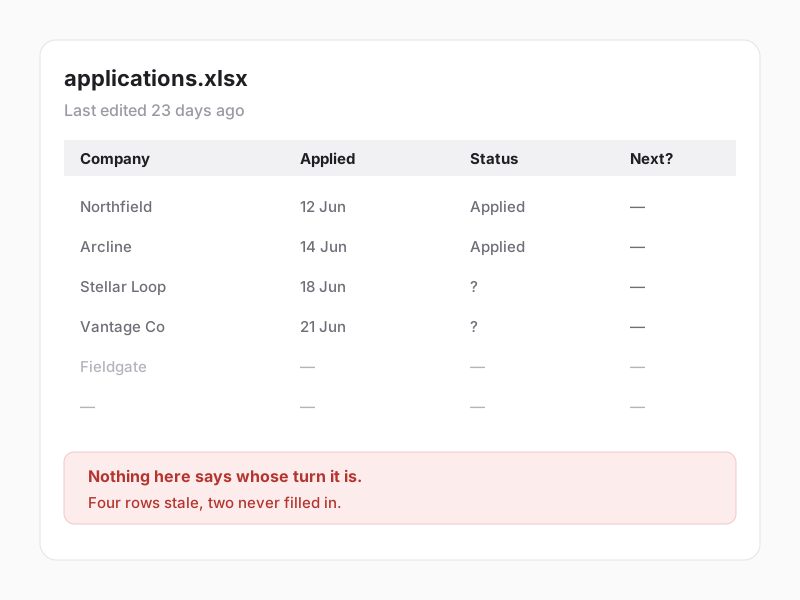
Everyone starts one. It works for about two weeks. The reason it stops is not laziness, it is that the spreadsheet asks for effort at the exact moment you have none left: right after you have finished an application, or right after a rejection. Those are the two worst moments to ask anyone to do data entry about themselves.
So the rows go stale, and a stale tracker is worse than no tracker, because now you distrust it. You stop opening it. A week later you have no idea whether that company you liked ever replied, and checking means going back through your inbox.
A tracker you have to remember to update is just a second job you did not apply for.
What is actually worth recording
Most templates ask for far too much. You do not need salary bands, recruiter LinkedIn URLs and a notes column you will never read. You need the few fields that change what you do next.
- The date you applied, which is the only input to whether a follow-up is due.
- Where it currently stands, in stages you would actually say out loud: applied, screening, interviewing, offer, closed.
- The last thing that happened, and who did it. You sent something, or they did.
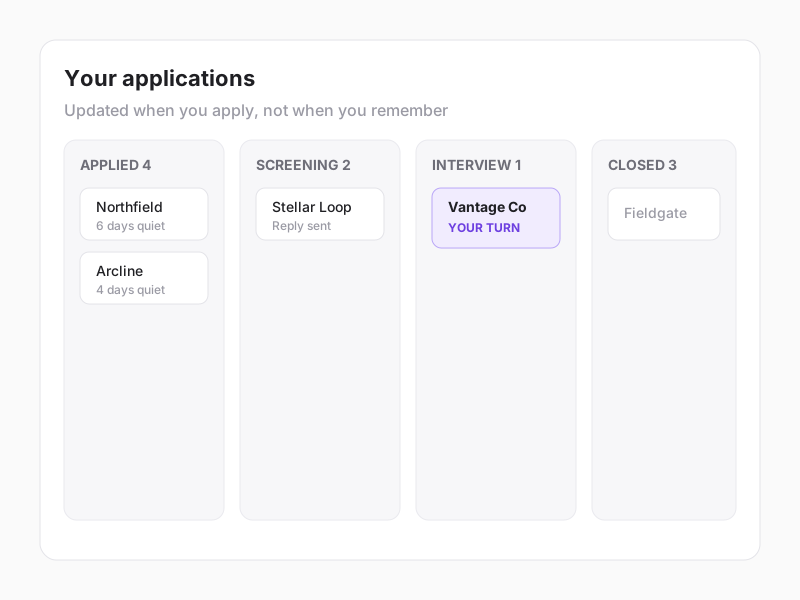
- Whether the ball is in your court. This is the single most useful field and the one nearly every template leaves out.
Two questions, not twenty
A tracker earns its place if it can answer two things at a glance. What has gone quiet and needs chasing? And what have I committed to that I have not done yet? Everything else is decoration. If you are building your own, optimise ruthlessly for those two views and throw the rest away.
The second question matters more than people expect. A surprising share of stalled processes are stalled on the candidate: a take-home nobody finished, availability nobody sent back, a reference nobody chased. Those feel like waiting when they are actually a queue.
Follow-ups are the whole return
Tracking is not an end in itself and it will not get you hired. Its entire value is that it makes one specific action possible: a polite, well-timed follow-up on a role that is genuinely still open. That is difficult to do well from memory and trivial to do from a list sorted by how long something has been silent.
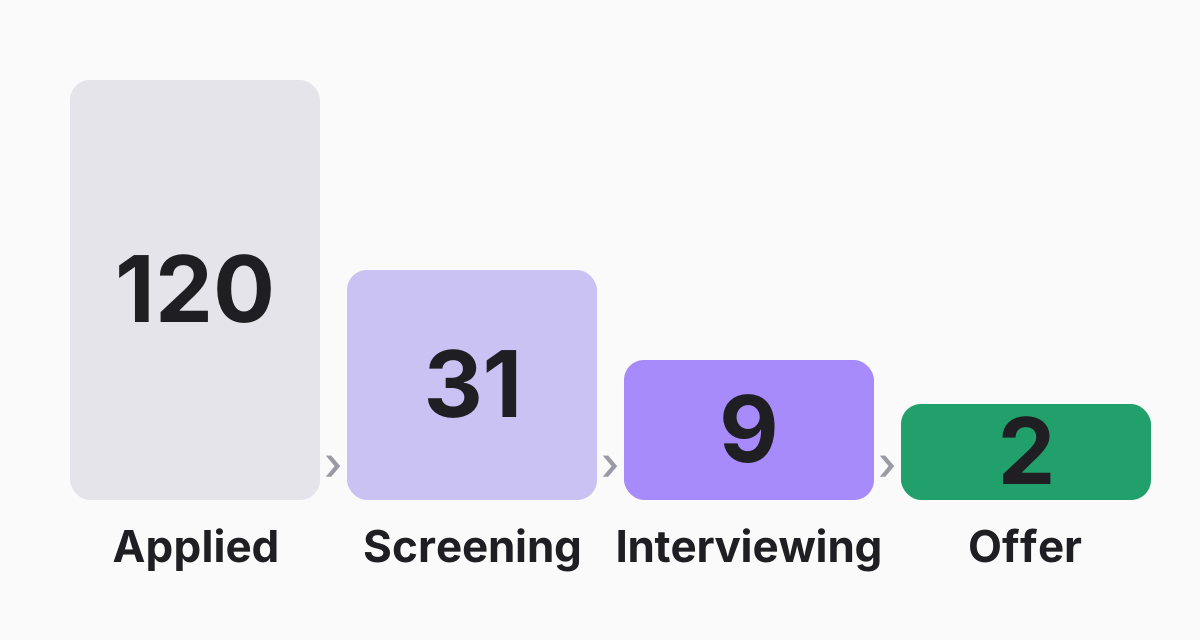
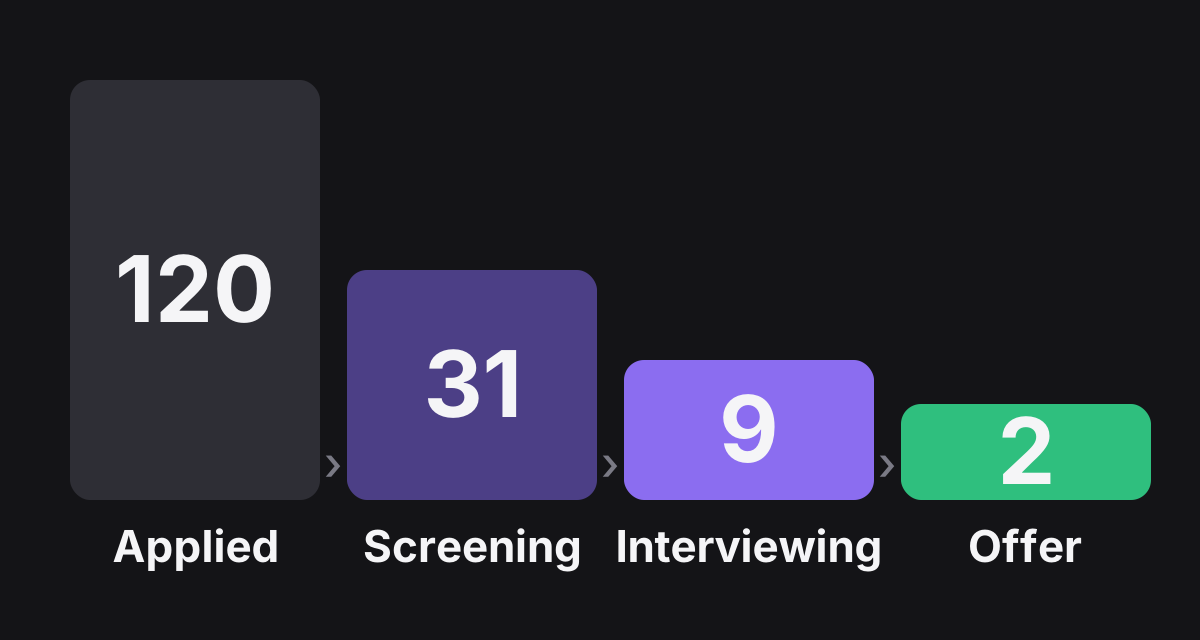
The other return is quieter. Seeing the pipeline laid out tells you where you actually lose people. Plenty of applications and no screens is a targeting or resume problem. Plenty of screens and no interviews is usually how you talk about the work. Those need completely different fixes, and you cannot tell them apart without the shape of the funnel in front of you.
Where this fits in ApplyHustle
Our application tracker exists because of the failure above: it fills itself in from the applications you have already made through the platform, so the record is a by-product of applying rather than a chore that follows it. Stages move, follow-up timing is visible, and nothing depends on you remembering to log anything on a bad day.
If you would rather keep your own spreadsheet, keep it. Just add the one column most of them are missing, the one that says whose turn it is, and sort by the date of the last thing that happened. That alone will recover more live conversations than another week of applying.